Pakistan Cyber Force: Demise of Japan

Top stories

Pakistan Cyber Force [Official]

Showing posts with label Demise of Japan. Show all posts

Wednesday, February 19, 2014

Japan prepares for War with China

Print Friendly and PDF

Japan is now considering future weapon transfers to other Asian countries as it builds alliances for a potential war with China.

Earlier today in Okinawa, Japanese officials met with representatives from the 10 member states of the Association of Southeast Asian Nations to expand technological and defensive cooperation between the countries.

Although Japan and ASEAN discussed joint cooperation in response to natural disasters and anti-terrorism, Japan’s Parliamentary Vice Minister of Defense revealed that the true intent of the meeting was to bolster defense against China’s “unilateral attempts to change the status quo by force.”

As part of Japanese Prime Minister Shinzo Abe’s plan to “deepen and enhance cooperation” with ASEAN, a ministry official told Kyodo News that Japan is currently looking to ease its policy on arms exports, a clear indication that the island nation is taking the threat of war with China seriously.

“China appears to be at the forefront of Abe’s defense vision, bolstering the case for Japan to strengthen ties with ASEAN,” the newspaper reported.

ASEAN consists of Indonesia, Malaysia, the Philippines, Singapore, Thailand, Bruei, Burma, Cambodia, Laos and Vietnam.

In December, a former Chinese Ambassador to the United Nations, Sha Zukang, said that the current territorial dispute between China and Japan over the Senkaku Islands could lead to World War III.

“If China started a war with Japan, it would be much larger than both the Sino-Japanese War and World War II,” he said to the China Times.

The dispute flared up in November when the Chinese government announced it would enforce air traffic restrictions inside a self-declared Air Defense Identification Zone which includes most of the East China Sea.

The controversial Chinese ADIZ not only overlaps the ADIZs of Japan and South Korea but also includes the Senkaku Islands, the aforementioned territory in dispute between China and Japan.

Amid these rising tensions, Japan is revising sections of its constitution which limits its military activities.

Additionally, Japan is reportedly ramping up nuclear weapons capabilities as reported earlier by Paul Joseph Watson.

China, on the other hand, plans to build four aircraft carriers in the next several years, including at least one that is nuclear powered.

The Chinese military also recently developed a more advanced ballistic missile which is capable of striking anywhere in the Asia-Pacific region, according to the Want China Times.

The United States is already involved in the territory dispute and a group of defense analysts warned lawmakers in December that the U.S. should also plan for war with China.

“Chinese leaders are ambitious and they are moving toward great power status,” Seth Cropsey, a senior fellow at the D.C.-based Hudson Institute, said according to DoD Buzz. “The U.S. is not taking this possibility as seriously as it should.”
(infowars.com)
Pakistan Cyber Force

Friday, February 8, 2013

Fukushima survivors to file class action lawsuit against Japanese govt, plant operator

Print Friendly and PDF


At least 350 people affected by the 2011 Fukushima nuclear meltdown will file a class action lawsuit against the Japanese government and the plant’s operator, Tokyo Electric Power Co (TEPCO) on the second anniversary of the disaster. Lawyers representing residents whose homes and farms were hit by radiation in the wake of the disaster said it was the largest suit on the issue filed against the government.

The plaintiffs will further seek some US$535 each in compensation from TEPCO for every month they have been displaced as a result of the accident.
They also plan to seek a court injunction that will require both the government and TEPCO to reduce radiation levels in the affected area to pre-disaster levels.  The suit will be filed on March 11, the two-year anniversary of the world’s worst nuclear accident since the 1986 Chernobyl disaster. Several other similar class-action suits against both the government and TEPCO will be filed with the Tokyo District Court on the same day.

"The government promoted nuclear power as a national policy and has been closely involved with it," lawyer Izutaro Managi told AAP news agency. "Being fully aware of the danger of losing power due to a tsunami, the government neglected its duty to prevent such an event," he said. "This is a suit to recover a Fukushima with neither radiation nor nuclear power," he continued. 

The Fukushima Daiichi nuclear disaster occurred after a 9.0-magnitude earthquake and a subsequent tsunami crashed into the power station and knocked out its cooling system leading to the meltdown of three reactor cores. Tens of thousands were forced to flee the area and many are still unable to return.
(RT)


Pakistan Cyber Force

Thursday, January 31, 2013

China, Japan and USZ Expanding Missile Interceptor Technology as Tensions Rise in Northeast Asia

Print Friendly and PDF


With North Korea declaring its intention to push ahead with a third nuclear test following the United Nations Security Council resolution on its launch of a long-range rocket, it seems hardly a coincidence that the US, China, and Japan have launched their own interceptor missiles and spy satellites. As the intensity of the North Korean nuclear crisis soars and the strategic competition between the US and China, and between China and Japan, heats up in the Asia-Pacific region, military tensions are on the rise in Northeast Asia.

On Jan. 26 (local time), the US Defense Department announced that it had succeeded in a test of a missile defense system that can intercept intercontinental ballistic missiles (ICBMs) that are aimed at the continental US while they are still outside the atmosphere. This test is part of a project that is being conducted to defend the continental US from the ICBM threat posed by North Korea and Iran.

The Missile Defense Agency (MDA), a section of the US Defense Department, said, “We were successful in our launch of a three-stage ground-based interceptor (GBI) from Vandenberg Air Force Base in California.”

The test was conducted as part of the development of the Ground-based Midcourse Defense (GMD). A ballistic missile’s trajectory is divided into the launch phase, a middle phase when it is in outer space beyond the atmosphere, and a final phase where it enters the atmosphere once again. GMD refers to intercepting a ballistic missile in this middle phase.

“We didn’t launch a real missile to serve as a target for the interceptor,” the MDA said. “However, if such a target missile had existed, the Exoatmospheric Kill Vehicle (EKV) that was attached to the interceptor rocket would have collided with the target and destroyed it.

During a test launch by the MDA in Dec. 2010, the EKV failed to intercept the target. This test involved actually launching a target object and attempting to destroy it. The most recent test took place after correcting the flaws in the guided missile technology that became apparent in the former test.

China also succeeded in a test launch of a ground-based mid-range interceptor missile conducted inside its own territory on Jan. 27, the country’s news agency Xinhua reported on Jan. 28, quoting a Defense Ministry official. “The test launch achieved the goals that we had set. The test was defensive in nature and was not targeted at any country,” the official emphasized.

This is the second time that China has officially announced that it has conducted an interceptor missile test. On Jan. 11, 2010, China said that it had successfully completed the test of a mid-range interceptor missile. At the time, the US press saw this as China’s response to the US Defense Department’s decision to permit sales of the MIM-104 Patriot interceptor missiles to Taiwan.

The interceptor test is a response to US moves to establish a missile defense perimeter in East Asia, suggested Song Zhongping, who served as an instructor with China’s Second Artillery Force, the strategic missile unit of the People’s Liberation Army (PLA).

“If the US does not accelerate its movements to establish a strategic missile defense system in the East Asia and Pacific region, and if it doesn’t upset the strategic balance, China won’t need to conduct an interceptor missile test,” Song said in an interview with Fenghuang Satellite TV.

On Jan. 27, Japan launched the Radar-4 information-gathering satellite, which functions as a spy satellite, from the Tanegashima Space Center in Kagoshima Prefecture. Now that the satellite, delivered on an H-2A rocket, has entered its planned orbit, Japan’s surveillance network has expanded to five information-gathering satellites three optical satellites and two radar satellites that are capable of monitoring every spot on earth once each day. Japan’s development of information-gathering satellites was triggered by the 1998 launch of the Taepodong missile in 1998.

Called information-gathering satellites, in reality they are spy satellites. “The satellites circle the globe about ten times a day. If there is only one optical and one radar satellite, a blind spot forms. There have to be two each in order to get rid of this blind spot,” the Yomiuri Shimbun newspaper reported.

The day before North Korea’s long-range rocket launch took place on Dec. 12, 2012, Japanese satellites had detected the rocket being removed from the launcher. However, after that, the area moved into the blind spot, and Japan was not able to track any further movements, the newspaper reported.

With the satellite launch, which was the sixteenth consecutive successful launch of Japan’s H-2A rocket, the country proudly displayed its rocket technology, which uses liquid hydrogen fuel.

“It’s not yet clear whether the simultaneous launch of interceptor missiles and spy satellites by the US, China and Japan took into account North Korea’s recent statements about missile launches and nuclear tests,” said a diplomatic source in Beijing. “However, we will need to watch carefully to see whether the major powers neighboring the Korean peninsula will treat moves by the North as a pretext to take measures to strengthen their own military might.”
4th Media

Thursday, November 15, 2012

Economic Collapse: Japan's Economy, Exports Rapidly Shrinking

Print Friendly and PDF

While investors are focused on the out of control eurozone crisis, Japan’s economy is showing signs of contraction as its GDP fell last quarter by 3.5%, the most since the earthquake and tsunami in early 2011, while exports and consumer spending slumped.

­The results fell below analysts’ expectations, which predicted Japan’s GDP to decline 3.4 % in the Q3, according to a Bloomberg News survey last week. It was expected to be the third technical recession since 2008.

“The GDP figures were grim," Japanese PM Yoshihiko Noda told parliament after the data was released. Noda is preparing for an election and has pledged to speed up government efforts to boost the economy. Weaker results could undermine his efforts including a crucial plan to raise the national sales tax from 2014 to boost revenues. The proposed measure would be the first tax rise in more than a decade and is considered politically controversial.

“Today’s bad economic numbers deliver unpleasant news for Noda,” Hiroshi Shiraishi, senior economist at BNP Paribas SA in Tokyo, told Bloomberg. “It will take a while for Japan to get back to a sound recovery, considering a modest pick-up in the global economy at best and the country’s damaged relationship with China.”

Japan suffered the worst September trade result in more than 30 years amid the territorial row with China. The long running dispute re-emerged after the Noda administration’s bought a group of islands that China also claims. Exports to China – Japan’s biggest trading partner – sank 14% from a year earlier to 953.4 billion yen ($12.2 billion). Meanwhile the spreading crisis in Europe also hurt Japanese exports.

Weaker exports have hit Japanese corporate majors such as Sharp, Panasonic, and Nissan, which heavily rely on foreign trade. Panasonic  forecast a $9.5bln loss this year, 30 times bigger than analyst estimates, while Hitachi Construction Machinery Co. and Nissan Motor Co. cut their full- year profit forecasts and cosmetics major Shiseido Co. plans spending cuts.

At the end of October the Bank of Japan expanded its asset-purchase program by 11 trillion yen ($137bln) to 91 trillion yen for the second time in two months. With the new weak figures the BoJ is likely to continue its supporting policy under political pressure, experts believe.

High debt burden is another problem of the Japanese economy. Earlier this year the US-based Fitch rating agency cut Japan's Long-Term Foreign and Local Currency Issuer Default Ratings (IDRs) to 'A+' from 'AA' and 'AA-' respectively. The move reflects “growing risks for Japan's sovereign credit profile as a result of high and rising public debt ratios,” according to Andrew Colquhoun, Head of Asia-Pacific Sovereigns at Fitch.

Japan's general government debt is expected to hit 239% of GDP by the end of 2012, compared to the average 39% for OECD economies and 8% for 'A' –rated economies. Even Greece has a debt of 178% of GDP. This debt ratio has risen by 61% since the global financial crisis broke out.

However, Fitch considers that broader private sector savings, official foreign reserves worth $1.3 trillion and the fact that the Japanese yen is a global reserve currency will help the country’s economy to stay firm.
(RT)
Pakistan Cyber Force

Thursday, November 1, 2012

Toshiba cuts forecast on global economy worries

Print Friendly and PDF


TOKYO, (Reuters) - Japan's Toshiba Corp cut its full-year operating profit forecast by 13 percent to 260 billion yen ($3.3 billion) on Wednesday, saying the uncertain global economy weighed on its prospects. The company said the continuing European debt crisis, slowdowns in China and India, and a strong yen were combining to "increase uncertainty about the future." For the July-September period, Toshiba posted an operating profit of 57.5 billion yen, slightly better than expected, but down 23 percent from a year ago due to revenue and profit declines in its semiconductor, television and home appliance segments.

That compared with an average operating profit forecast of 55.5 billion yen by four analysts surveyed by Thomson Reuters I/B/E/S. Toshiba, Japan's leading chipmaker, saw operating profit for its electronic device segment, which includes its NAND memory chip business, drop 28 percent to 27.6 billion yen in the six months to September.

Its NAND chip business returned to profit in the three months to September, though it lost money in the April-June quarter, said Executive Vice President Makoto Kubo. The performance of the sector was the biggest single swing factor in Toshiba's results. Toshiba's NAND chips are used in Apple Inc's iPhones and tablet devices. Toshiba, which cut NAND chip output at its main plant by 30 percent after seeing a supply glut its earlier this year, will continue production cuts in the October-March period, but by less, Kubo said.

"We were able to bring the memory chip business back into profit in the second quarter, though the profit level is still not sufficient," he told reporters at a briefing. NAND operating profit in the second quarter was between 10-99 billion yen, though much closer to 10 billion yen, he added. Toshiba's biggest rival, Samsung Electronics Co Ltd , forecast last week global shipments of NAND chips to grow in the mid-20 percent range in the current quarter, led by new mobile product launches. Toshiba booked a 3.6 billion yen loss in its digital products segment in April-September, largely due to a major drop in LCD television demand in Japan.

It also cut its television sales target by 19 percent to 13 million units and said the television business will probably be in the red for the financial year, although it may eek out a profit in the fourth quarter, Kubo told reporters. In May, Toshiba said it aimed to more than double its annual operating profit in three years by expanding its social infrastructure business, which makes products ranging from elevators to medical systems to nuclear power plants, and by boosting sales of electronic devices. The social infrastructure segment posted a record-high operating profit of 49.7 billion yen in the April-September quarter.

Shares of Toshiba, which competes with Hynix Semiconductor Inc in semiconductors and with General Electric Co and Areva SA in nuclear reactors, closed up 4.59 percent ahead of the results. Tokyo's benchmark Nikkei closed up 0.98 percent.
(Reuters)

Pakistan Cyber Force

Friday, October 26, 2012

Fish Near Fukushima Still Contaminated: Study

Print Friendly and PDF


WASHINGTON: Elevated levels of cesium found in fish off Japan's east coast 18 months after the Fukushima nuclear disaster suggest a "continuing source" of radiation in the ocean, a new study has revealed. Marine chemist Ken Buesseler of the Woods Hole Oceanographic Institution reviewed official Japanese data on radiation levels in fish, shellfish and seaweed collected near the crippled nuclear plant.

Buesseler concluded the lingering contamination may be due to low-level leaks from the facility or contaminated sediment on the ocean floor, according to his research, published Thursday in the US magazine Science. He estimated that about 40 percent of fish caught near Fukushima are considered unfit for consumption under Japanese regulations.

"To predict how the patterns of contamination will change over time will take more than just studies of fish," said Buesseler, who led an international research cruise in 2011 to study the spread of radionuclides from Fukushima. "What we really need is a better understanding of the sources and sinks of cesium and other radionuclides that continue to drive what we're seeing in the ocean off Fukushima."

A huge tsunami, sparked by a massive 9.0-magnitude undersea earthquake, swamped the Fukushima Daiichi nuclear plant in March 2011. Reactors went into meltdown, spewing radiation over a large swathe of Japan's agriculture-heavy northeast, in the planet's worst atomic disaster for a generation. Around 19,000 people were killed or remain missing. The study called it the "largest accidental release of radiation to the ocean in history".

Cesium levels vary across fish types, though Buesseler also found that demersal, or bottom-dwelling fish, consistently showed the highest cesium counts from the damaged nuclear plant. Levels of contamination of almost all types of fish are not declining, even though the levels vary, the study showed.
The scientist stressed that the levels of radiation found in the vast majority of fish caught off Japan's northeastern coast remain below safe limits for consumption, which the Japanese government tightened in April this year.

Fears about food safety, which was once a given in Japan, have only slightly abated in the wake of the Fukushima disaster, with many consumers still eschewing products from the affected area despite government reassurances.
Japan's powerful farming and fishing industries have suffered both at home and abroad, with exports of farm products taking a major hit in 2011, falling 7.4 percent compared to the previous year. Buesseler and Mitsuo Uematsu of the University of Tokyo are organising a scientific symposium in Tokyo on November 12 and 13 to present the latest findings on how the nuclear disaster has affected the ocean and marine life.
(AFP)


Pakistan Cyber Force

Thursday, October 25, 2012

Fukushima Unit 4 sinking unevenly

Print Friendly and PDF


The spent fuel pool at Fukushima Unit 4 is the top short-term threat to humanity, and is a national security issue for America. As such, it is disturbing news that the ground beneath unit 4 is sinking. Specifically, Unit 4 sunk 36 inches right after the earthquake, and has sunk another 30 inches since then. Moreover, Unit 4 is sinking unevenly, and the building may begin tilting.


An international coalition of nuclear scientists and non-profit groups are calling on the U.N. to coordinate a multi-national effort to stabilize the fuel pools. And see this. Given the precarious situation at Unit 4, it is urgent that the world community pool its scientific resources to come up with a fix.

(Washington's Blog)


Pakistan Cyber Force

Sunday, September 30, 2012

China Blasts Japan on "Stealing" Disputed Islands

Print Friendly and PDF


Chinese Foreign Minister Yang Jiechi says Japan “stole” from China a group of islands in the East China Sea, disputed by Beijing and Tokyo.


“China strongly urges Japan to immediately stop all activities that violate China’s territorial sovereignty, take concrete actions to correct its mistakes and return to the track of resolving the dispute through negotiation,” Yang said in an address to the 67th session of the UN General Assembly in New York City on Thursday.

“The moves taken by Japan are totally illegal and invalid. They can in no way change the historical fact that Japan stole Diaoyu and its affiliated islands from China and the fact that China has territorial sovereignty over them.”

On September 11, Tokyo signed a deal to buy three of the islands, known as Diaoyu in China and Senkaku in Japan, from their private Japanese owner in line with plans to nationalize the archipelago.

The move has angered the Chinese government and led to several anti-Japan demonstrations in China.

Yang’s remarks came after Japan’s Prime Minister Yoshihiko Noda said on Wednesday that Tokyo will not compromise on the territorial dispute with Beijing, adding that the islands “are an integral part of our territory in the light of history and of international law.”

Japan and China have long been in a dispute over the sovereignty of the uninhabited islands, which are located near a crucial shipping lane and would give the owner exclusive oil, mineral and fishing rights in the surrounding waters.

Friday, September 28, 2012

Japan's economy stuttering ahead of China crisis

Print Friendly and PDF


Japan released yet more worrying figures Friday showing the world's third largest economy was already stuttering before a damaging territorial dispute erupted with its largest trading partner. Factory output in August shrank by a bigger-than-expected 1.3 percent from the previous month, the industry ministry said as it admitted production activity was weakening. The decline was much sharper than an average market forecast of a 0.4 percent drop.


Japan's export-driven economy is struggling to right itself following a series of problems, including the March 2011 earthquake and tsunami disaster, the European debt crisis, slowing Chinese demand and the strong yen. "Industrial Production appears to be weakened," the ministry said in a statement, downgrading its overall assessment. It had said production "appears to be flat" when it announced July's preliminary data a month ago.

Japanese businesses are now worried about taking a hit from the effects of a flare-up in the row between Tokyo and Beijing over the ownership of islands in the East China Sea. Japan's nationalisation in September of three islands in the chain, called Senkaku in Japan and Diaoyu in China, triggered anti-Japan rallies across China. Major Japanese companies were forced to close factories briefly.

Auto giants Toyota and Nissan said Wednesday they would cut production in China because demand for Japanese cars has dropped, while airlines have been hit by cancellations of seats on China-bound flights. Mooted Chinese consumer boycotts of Japanese products are also feared, unsettling firms sending goods to China, Japan's number one export market.

The industry ministry, citing a survey of production forecasts by manufacturing companies, said factory output is expected to fall by a further 2.9 percent in September and to be flat in October. Mizuho Securities Research and Consulting senior economist Norio Miyagawa said the ministry's outlook survey suggested "output may lose steam even further.


"We are likely to see sluggish output at least until October, especially in the automobile sector," he told Dow Jones Newswires, noting the row with China was a downside risk for the economy. "If the current disputes with China become prolonged, that will damage Japan's output and the economy.


Kengo Suzuki, forex strategist at Mizuho Securities, said "a fall in foreign demand could further pressure the Japanese economy.” It could also raise expectations for further monetary easing in the long run, he added. The Bank of Japan followed its US and European counterparts last week, announcing $128-billion extra bond buying to take its total monetary easing effort past $1 trillion as it seeks to revitalise the economy.


Economists attributed the August fall to weakening domestic consumer spending and stocked-up inventories as well as China's corporate performance and the debt crisis in Europe. Data released by the internal affairs ministry Friday showed so sign of Japan's breaking out of years of deflation.


Core consumer prices in Japan, which excludes volatile prices of fresh food, fell for the fourth straight month in August, dropping 0.3 percent year-on-year, data showed. The ministry also said in a separate survey Friday that household spending rose a modest 1.8 percent in August from a year earlier. Meanwhile, the country's jobless rate fell slightly to 4.2 percent in August, down from 4.3 percent in July.

Monday, May 21, 2012

Nuclear Holocaust: 40,000+ Japanese menaced by radiation poisoning; compelled to mass evacuate

Print Friendly and PDF

Japanese officials are currently engaging in talks with Russian diplomats about where tens of millions of Japanese refugees might relocate in the very-likely event that the Fukushima Daiichi nuclear facility’s Reactor 4 completely collapses. According to a recent report by EUTimes.net, Japanese authorities have indicated that as many as 40 million Japanese people are in “extreme danger” of radiation poisoning, and many eastern cities, including Tokyo, may have to be evacuated in the next few weeks or months to avoid extreme radiation poisoning.

As we continue to report, the situation at Fukushima is dire, to say the least. Reactor 4 is on the verge of complete collapse (http://www.naturalnews.com/035789_Fukushima_Cesium137_PlumeGate.html), which would send radioactive nuclear fuel from thousands of fuel rods directly into the atmosphere. These fuel rods, after all, are already exposed to the open air, but the full release of their fuel would cause not only a regional catastrophe, but also a global nuclear holocaust.

“A report released in February by the Independent Investigation Commission on the Fukushima Daiichi Nuclear Accident stated that the storage pool of the plant’s No. 4 reactor has clearly been shown to be ‘the weakest link’ in the parallel, chain-reaction crises of the nuclear disaster,” reported the Mainichi Daily News recently.

“The worst-case scenario drawn up by the government includes not only the collapse of the No. 4 reactor pool, but the disintegration of spent fuel rods from all the plant’s other reactors. If this were to happen, residents in the Tokyo metropolitan area would be forced to evacuate.”

So in an effort to establish contingency for the Japanese people in closest proximity to the fray, authorities are considering potentially relocating tens of millions of Japanese people to the Kuril Islands, which are located in Russia’s Sakhalin Oblast region, or potentially even to China, where hundreds of uninhabited “ghost town” cities with no apparent use could house at least 64 million refugees. If this relocation were to occur, Japan would largely become a barren wasteland.

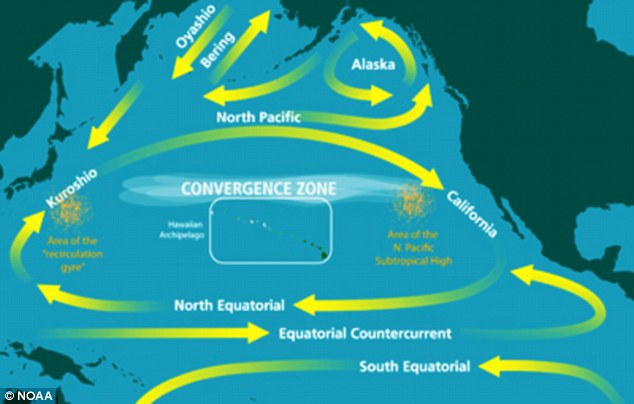
The Pacific Ocean Is Dying

How about the rest of the Pacific Ocean? What does the future hold in store for the largest body of water on Earth. One that circulates more water than any other ocean and possesses more coastline than all the others put together. The following headlines portend the future health of the Pacific, so all are encouraged to take serious notice.


The upshot of each of these articles is that the Pacific Ocean is extremely vulnerable to the radioactive waste being dumped into her waters at Fukushima. Should another catastrophic earthquake occur, it could create a new and more complicated nuclear disaster scenario that is truly irreparable. Even without any seismic activity affecting the nuclear sites, the current state of affairs has taken for granted that the Pacific Ocean will become a nuclear dumping ground for decades to come. It has not been lost on us that such an inevitability appears to be the only practical expedient available.

We are truly saddened by the great loss of marine life and harm to myriad aquatic and shoreline ecosystems. As the nuclear radiation is exported around the Asian Ring of Fire, genetic mutation will begin to affect every form of life — from phytoplankton to whales, from seabirds to mangroves, from dolphins to krill. Everything that lives near the Pacific will be at risk to some degree. Anyone who lives, works or plays in or around the Pacific will be compelled to evaluate their relationship to this great ocean.
What have we done to Mother Earth by siting nuclear power plants in the most seismically active region of the world?!

What in God’s Creation can possibly be done to fix it?
Never in the history of humankind has the planet been confronted with such a grave set of circumstances. Fukushima represents all that can go wrong when scientific applications and technological advancement within a crude industrial context have gone awry. Unfortunately, given the many trajectories that numerous fields of technological innovation are currently on, Fukushima and the BP Gulf oil spill of 2012 may only be the beginning of an accelerating period of technospheric breakdown which will plague the Earth.

Author’s Note:
NuclearReader.info has provided an invaluable service to the worldwide internet community by giving away their ebook currently linked here: http://www.nuclearreader.info/. The first chapter entitled “Hazards of Low Level Radioactivity” ought to be a must read for anyone impacted by Fukushima. Also of critical significance, there is a phenomenon known as the Photoelectric Effect which weighs heavily throughout the entire contamination zone associated with the Fukushima nuclear disaster. The following article gives an important overview for those who want to know what we are really dealing with as a planetary civilization.


Addendum
:
There has been no mention in this essay of the massive amount of debris pollution brought about by the Japan earthquake and tsunami of March, 2011. We have chosen a photo-documentary instead to portray the current state of affairs in various locations throughout the Pacific Ocean.

Special Notice:
The following article gives a much broader view of the current predicament which prevails across the planet. Clearly, technospheric breakdown is a phenomenon which few foresaw, otherwise we would not find ourselves at the edge of the precipice with respect to so many risky and dangerous technologies and misapplications of scientific developments.
For example, so committed is the world community to the hydrocarbon fuel paradigm that there appears to be no way of lessening our dependence on such an environmentally destructive energy source. Likewise, even in the face of Fukushima, many nations are unwilling to reconsider their dependence on the nuclear power paradigm.

This essay elucidates the forces and motivations at work which militate against sound, rational and safe energy policy.#Link

‘Wave’ of highly-radioactive waste reportedly headed for West Coast of U.S.

For the Japanese people, the Fukushima disaster represents the complete demise of their nation, as literally nothing is being done to contain the thousands of exposed fuel rods that will eventually explode when Reactor 4 fails. But the consequences of all this are not limited to just Japan, as the rest of the world, including the U.S., will bear the brunt of this ticking nuclear time-bomb as well. We are, in fact, already suffering the consequences of this “nuclear war without a war” (http://globalresearch.ca/index.php?context=va&aid=28870).

Late last year, for example, it was reported that U.S. officials ordered the Tokyo Electric Power Company (TEPCO) to release three million gallons of radioactive waste into the Pacific Ocean. Now, according to The Intel Hub, this waste will soon arrive on the shores of the U.S. West Coast, unbeknownst to the millions of Americans living in that region that will be exposed to it.

This new ‘wave’ of radiation is, of course, in addition to previous waves that have already killed thousands of people, many of whom were children, and sparked a considerable uptick in cancer cases. And as time goes on, more and more people living in America will begin to develop chronic conditions as a result of perpetual radiation poisoning from Fukushima, and many will die, all while the mainstream media remains willfully silent on the issue.

And the federal government has known all along that the Fukushima disaster is shaping up to be the most severe global catastrophe in recorded history, as was evidenced in a recent Freedom of Information Act (FOIA) request. Not only were federal authorities aware of the extreme dangers posed by Fukushima from the early days of the disaster, but they also orchestrated misinformation campaigns to keep the American people, and the rest of the world, in the dark about the truth (http://www.naturalnews.com/035847_plumegate_Fukushima_radiation.html).

Since neither the U.S. nor the Japanese governments appear willing to actually deal with Fukushima, and particularly the Reactor 4 situation, NaturalNews is calling on the United Nations (U.N.) to take swift action. A new petition urges the U.N. to organize a Nuclear Security Summit to address the problem of Reactor 4, and also establish an independent assessment team to somehow stabilize it and prevent its fuel from potentially destroying all life on earth.#Link
(Pak Alert Press)

Pakistan Cyber Force

Friday, May 4, 2012

Energy Crisis Looms: Japan Closes Last Nuclear Reactor

Print Friendly and PDF

Hokkaido Electric Power Co.'s Tomari nuclear
power plant is seen in Tomari town on Japan's
northern island of Hokkaido (Reuters / Kyodo)
Japan is set to shut down its last operational nuclear plant following last year’s Fukushima meltdown disaster. However, with a giant energy quota to fill and no viable substitute, many predict a nuclear-free future will be short-lived. The Hokkaido electric company closes down its Tomari plant, the last of Japan’s 53 atomic power stations, on Saturday, leaving a country-already dependent on foreign fuel imports -without nuclear energy. Since the earthquake and tsunami caused a triple meltdown last March at the Fukushima Daiichi plant, the Japanese government has been gradually de-commissioning and closing plants throughout the country.

The government has faced increasing pressure from environmental groups to abandon nuclear energy following the Fukushima catastrophe. It forced tens of thousands of Japanese from their homes after dangerous levels of radiation contaminated local food and water supplies. The decision to turn away from nuclear energy is a controversial one in resource-poor Japan. Prior to the March 2011 disaster the country drew approximately 30 per cent of its energy from nuclear power, a figure that was expected to rise to 50 per cent by 2030 to meet exploding energy demands. The energy vacuum is set to incur shortfalls and power cuts this summer, with supplies falling short by 14 per cent in Tokyo and up to 16 per cent in western Japan.

"I have to say we are facing the risk of a very severe electricity shortage,"
said Economy, Trade and Industry Minister Yukio Edano in April. He added that rising fuel imports would be felt by the Japanese taxpayer.
­

Japan bites off more than it can chew?

As it stands the transfer to a non-nuclear energy infrastructure will be very costly as Japan will have no choice but to step-up its fuel imports. Preliminary figures from the international energy agency increase oil-demand to 4.5 barrels a day, costing an additional $100 million, a bleak prospect for an economy that reported its biggest ever trade deficit in 2011.

Elderly women shout slogans as they wave banners during a demonstraton denouncing nuclear power plants (AFP Photo / Toru Yamanaka)
Elderly women shout slogans as they wave banners
during a demonstraton denouncing nuclear power
plants (AFP Photo / Toru Yamanaka)
The Japanese Finance Ministry said its deficit had risen to $50 billion because of the extra fuel imports needed to compensate for the lack of nuclear energy.
Environmental groups see the closure of the country’s last operational plant as an opportunity to wean Japan off atomic energy and follow the German model. However, creating the infrastructure for green energy will take time and significant investment. Currently, Japan gets around 8 per cent of its energy from renewable sources and is looking to raise that figure to over 25 per cent by 2030.

Many have criticized Japan’s plans as too ambitious and view the reactivation of the country’s power plants as inevitable in spite of public protest. Dr. Howard Hayden, Professor of Physics at Connecticut University, said that Japan “will probably go back to nuclear in due time because money talks.” “It’s costing them very dearly. They haven’t got nearly enough electricity and they have actually called on some factories to cut back their operations quite a bit,” said Hayden. He added that some factories in the North of Japan had been effectively shut down because of power shortages. “Eventually they will probably restart most of their reactors. The ones that are in possible danger of tsunamis, they’ll of course either shut down completely or build some much better protective walls around them”, Hayden concluded.
(RT)
Enticing Fury
Pakistan Cyber Force

Monday, April 23, 2012

Japan: Two blasts destroy chemical plant (VIDEO)

Print Friendly and PDF

A dramatic video shows the moment a massive explosion struck a chemical plant in south-west Japan. At least one person was killed and some 17 injured as two blasts hit the facility on Sunday. The blasts happened at Mitsui Chemicals in Yamaguchi prefecture after workers tried to shut down part of the plant following a problem in a different sector. The first explosion occurred at 2am local time killing a 22-year old worker and injuring 11 others. The second blast took place few hours later but did not hurt anyone.
The flames were brought under control about 15 hours after the second explosion. Hundreds of nearby homes were damaged and at least six people injured by glass fragments, NHK reports. Officials say there has been no toxic leak.
(RT)
Enticing Fury
Pakistan Cyber Force

Monday, April 16, 2012

40 Million Japanese to be evacuated from Eastern Japan, Tokyo included; Japan asks Russia to return Kuril Islands

Print Friendly and PDF


A new report circulating in the Kremlin today prepared by the Foreign Ministry on the planned re-opening of talks with Japan over the disputed Kuril Islands during the next fortnight states that Russian diplomats were “stunned” after being told by their Japanese counterparts that upwards of 40 million of their peoples were in “extreme danger” of life threatening radiation poisoning and could very well likely be faced with forced evacuations away from their countries eastern most located cities… including the world’s largest one, Tokyo.


The Kuril Islands are located in Russia’s Sakhalin Oblast region and stretch approximately 1,300 km (810 miles) northeast from Hokkaidō, Japan, toKamchatka, Russia, separating the Sea of Okhotsk from the North Pacific Ocean. There are 56 islands and many more minor rocks. It consists of Greater Kuril Ridge and Lesser Kuril Ridge, all of which were captured by Soviet Forces in the closing days of World War II from the Japanese.


The “extreme danger” facing tens of millions of the Japanese peoples is the result of the Fukushima Daiichi Nuclear Disaster that was a series of equipment failures, nuclear meltdowns, and releases of radioactive materials at the Fukushima I Nuclear Power Plant, following the Tōhoku earthquake and tsunami on 11 March 2011.


According to this report, Japanese diplomats have signaled to their Russian counterparts that the returning of the Kuril Islands to Japan is “critical” as they have no other place to resettle so many people that would, in essence, become the largest migration of human beings since the 1930’s when Soviet leader Stalin forced tens of millions to resettle Russia’s far eastern regions.


Important to note, this report continues, are that Japanese diplomats told their Russian counterparts that they were, also, “seriously considering” an offer by China to relocate tens of millions of their citizens to the Chinese mainland to inhabit what are called the “ghost cities,” built for reasons still unknown and described, in part, by London’s Daily Mail News Service in their 18 December 2010 article titled “The Ghost Towns Of China: Amazing Satellite Images Show Cities Meant To Be Home To Millions Lying Deserted” that says:
“These amazing satellite images show sprawling cities built in remote parts of China that have been left completely abandoned, sometimes years after their construction. Elaborate public buildings and open spaces are completely unused, with the exception of a few government vehicles near communist authority offices. Some estimates put the number of empty homes at as many as 64 million, with up to 20 new cities being built every year in the country’s vast swathes of free land.”
Foreign Ministry experts in this report note that should Japan accept China’s offer, the combined power of these two Asian peoples would make them the largest super-power in human history with an economy larger than that of the United States and European Union combined and able to field a combined military force of over 200 million. To how dire the situation is in Japan was recently articulated by Japanese diplomat Akio Matsumura who warned that the disaster at the Fukushima nuclear plant may ultimately turn into an event capable of extinguishing all life on Earth.


According to the Infowars.Com News Service:
“Matsumura posted [this] startling entry on his blog following a statement made by Japan’s former ambassador to Switzerland, Mitsuhei Murata, on the situation at Fukushima.Speaking at a public hearing of the Budgetary Committee of the House of Councilors on 22 March 2012, Murata warned that “if the crippled building of reactor unit 4 – with 1,535 fuel rods in the spent fuel pool 100 feet (30 meters) above the ground – collapses, not only will it cause a shutdown of all six reactors but will also affect the common spent fuel pool containing 6,375 fuel rods, located some 50 meters from reactor 4,” writes Matsumura.In both cases the radioactive rods are not protected by a containment vessel; dangerously, they are open to the air. This would certainly cause a global catastrophe like we have never before experienced. He stressed that the responsibility of Japan to the rest of the world is immeasurable. Such a catastrophe would affect us all for centuries. Ambassador Murata informed us that the total numbers of the spent fuel rods at the Fukushima Daiichi site excluding the rods in the pressure vessel is 11,421.”

Disturbingly, the desperate situation facing Japan is, also, facing the United States as Russian military observers overflying the USZ this week as part of the Open Skies Treaty are reporting “unprecedented” amounts of radiation in the Western regions of that country, a finding that was further confirmed by scientists with the Woods Hole Oceanographic Institute who have confirmed that a wave of highly radioactive waste is headed directly for the USZ west coast.


Important to note is that this new wave of Fukushima radiation headed towards the USZ is in addition to earlier radiation events that American scientists are now blaming for radioactive particles from Japan being detected in California kelp.


Though the news of this ongoing global catastrophe is still being heavily censored in the USZ, the same cannot be said about Japan, and as recently reported by the leading Japanese newspaper The Mainichi Daily News that reports:
“One of the biggest issues that we face is the possibility that the spent nuclear fuel pool of the No. 4 reactor at the stricken Fukushima No. 1 Nuclear Power Plant will collapse. This is something that experts from both within and outside Japan have pointed out since the massive quake struck. TEPCO, meanwhile, says that the situation is under control. However, not only independent experts, but also sources within the government say that it’s a grave concern.The storage pool in the No. 4 reactor building has a total of 1,535 fuel rods, or 460 tons of nuclear fuel, in it. The 7-story building itself has suffered great damage, with the storage pool barely intact on the building’s third and fourth floors. The roof has been blown away. If the storage pool breaks and runs dry, the nuclear fuel inside will overheat and explode, causing a massive amount of radioactive substances to spread over a wide area. Both the U.S. Nuclear Regulatory Commission (NRC) and French nuclear energy company Areva have warned about this risk.A report released in February by the Independent Investigation Commission on the Fukushima Daiichi Nuclear Accident stated that the storage pool of the plant’s No. 4 reactor has clearly been shown to be “the weakest link” in the parallel, chain-reaction crises of the nuclear disaster. The worse-case scenario drawn up by the government includes not only the collapse of the No. 4 reactor pool, but the disintegration of spent fuel rods from all the plant’s other reactors. If this were to happen, residents in the Tokyo metropolitan area would be forced to evacuate.”

Even though this crisis in Japan has been described as “a nuclear war without a war,” and the USZ Military is being reported is now stocking up on massive amounts of anti-radiation pills in preparation for nuclear fallout, there remains no evidence at all the ordinary peoples are being warned about this danger in any way whatsoever.
(WhatDoesItMean)

Enticing Fury
Pakistan Cyber Force

Related Posts Plugin for WordPress, Blogger...