Pakistan Cyber Force: Japan's Nuclear Meltdown

Top stories

Pakistan Cyber Force [Official]

Showing posts with label Japan's Nuclear Meltdown. Show all posts

Friday, February 8, 2013

Fukushima survivors to file class action lawsuit against Japanese govt, plant operator

Print Friendly and PDF


At least 350 people affected by the 2011 Fukushima nuclear meltdown will file a class action lawsuit against the Japanese government and the plant’s operator, Tokyo Electric Power Co (TEPCO) on the second anniversary of the disaster. Lawyers representing residents whose homes and farms were hit by radiation in the wake of the disaster said it was the largest suit on the issue filed against the government.

The plaintiffs will further seek some US$535 each in compensation from TEPCO for every month they have been displaced as a result of the accident.
They also plan to seek a court injunction that will require both the government and TEPCO to reduce radiation levels in the affected area to pre-disaster levels.  The suit will be filed on March 11, the two-year anniversary of the world’s worst nuclear accident since the 1986 Chernobyl disaster. Several other similar class-action suits against both the government and TEPCO will be filed with the Tokyo District Court on the same day.

"The government promoted nuclear power as a national policy and has been closely involved with it," lawyer Izutaro Managi told AAP news agency. "Being fully aware of the danger of losing power due to a tsunami, the government neglected its duty to prevent such an event," he said. "This is a suit to recover a Fukushima with neither radiation nor nuclear power," he continued. 

The Fukushima Daiichi nuclear disaster occurred after a 9.0-magnitude earthquake and a subsequent tsunami crashed into the power station and knocked out its cooling system leading to the meltdown of three reactor cores. Tens of thousands were forced to flee the area and many are still unable to return.
(RT)


Pakistan Cyber Force

Thursday, October 25, 2012

Fukushima Unit 4 sinking unevenly

Print Friendly and PDF


The spent fuel pool at Fukushima Unit 4 is the top short-term threat to humanity, and is a national security issue for America. As such, it is disturbing news that the ground beneath unit 4 is sinking. Specifically, Unit 4 sunk 36 inches right after the earthquake, and has sunk another 30 inches since then. Moreover, Unit 4 is sinking unevenly, and the building may begin tilting.


An international coalition of nuclear scientists and non-profit groups are calling on the U.N. to coordinate a multi-national effort to stabilize the fuel pools. And see this. Given the precarious situation at Unit 4, it is urgent that the world community pool its scientific resources to come up with a fix.

(Washington's Blog)


Pakistan Cyber Force

Tuesday, July 3, 2012

Israhell's Nuclear Holocaust: Fukushima Reactor No. 2 Leaking, Over-Heating

Print Friendly and PDF

The Japanese government has been working hard to cover up the severity of the Fukushima disaster which government agencies have hidden important data in a direct intentional effort to misrepresent the effects of the crisis to the public.


Suppression of documents that reveal the fall out forecasts from Fukushima was deliberately underestimated in public. The System for Prediction of Environmental Emergency Dose Information (SPEEDI) system was compromised to keep the public from panicking . The censoring’s purpose was to avoid public outcry because radiation levels were much more dangerous than officials let on. Essentially, they were endangering the Japanese citizens to avoid dealing with their fear.


Purveying the propaganda is the UN’s International Atomic Energy Agency (IAEA) that supposed in a study that because Japanese radiation levels were negligible, their foods, such as milk and vegetables, are safe for consumption. The World Health Organization (WHO) jumped on the bandwagon to also proclaim that due to their research and the Linear No-Threshold Dose hypothesis (LNT), the radiation exerted from the Fukushima disaster worldwide was not a danger to the general population.


However their lies have been exposed in independent study. In May 2011, the Norsk Institute’s online site, which was monitoring worldwide radioactive contamination across the globe. They compiled a list of toxins that were introduced by the Fukushima plume.


Here is a short list of the half-life of five of the radioactive isotopes in the air, food and water that are poisoning us and children:


• Cesium 137: 30 years
• Plutonium 239: 24,000 years
• Strontium 90: 29 years [mimics calcium in the body]
• Uranium 235: 700-million years
• Iodine 131: 8 days [absorbed into the thyroid and gives heavy radiation dose


Over the past weekend, at the Fukushima Daiichi nuclear power plant, reactor No. 4 was automatically suspended because the cooling system for the spent fuel pool begun to malfunction.


Tokyo Electric Power Corporation (TEPCO) was unable to activate the cooling system. Plant officials are “looking into the situation” assuming that an expedited rise in temperature is unlikely. However if this temperature continues to rise, TEPCO will not be able to control it and the temperature could exceed 65 Celsius, which is passed regulatory limits.


Just days before this development, TEPCO admitted that record numbers of radiation was detected leaking from the Fukushima plant. TEPCO said: “Workers cannot enter the site and we must use robots for the demolition.” Workers for TEPCO were unable to locate where the radioactive leaks were originating, despite using infrared cameras to search the suppression chamber in reactor No. 2.


While shareholders for TEPCO voted to restart certain nuclear reactors, after an endorsement from Japanese Prime Minister Yoshihiko Noda, over 200,000 protesters took to the streets to let the powers that be know their disapproval. Noda gave his blessing for two reactors at the Kansai Electric’s Oi nuclear plant in Fukui Prefecture to be restarted.
(Occupy Corporatism)
Pakistan Cyber Force

Monday, May 21, 2012

Nuclear Holocaust: 40,000+ Japanese menaced by radiation poisoning; compelled to mass evacuate

Print Friendly and PDF

Japanese officials are currently engaging in talks with Russian diplomats about where tens of millions of Japanese refugees might relocate in the very-likely event that the Fukushima Daiichi nuclear facility’s Reactor 4 completely collapses. According to a recent report by EUTimes.net, Japanese authorities have indicated that as many as 40 million Japanese people are in “extreme danger” of radiation poisoning, and many eastern cities, including Tokyo, may have to be evacuated in the next few weeks or months to avoid extreme radiation poisoning.

As we continue to report, the situation at Fukushima is dire, to say the least. Reactor 4 is on the verge of complete collapse (http://www.naturalnews.com/035789_Fukushima_Cesium137_PlumeGate.html), which would send radioactive nuclear fuel from thousands of fuel rods directly into the atmosphere. These fuel rods, after all, are already exposed to the open air, but the full release of their fuel would cause not only a regional catastrophe, but also a global nuclear holocaust.

“A report released in February by the Independent Investigation Commission on the Fukushima Daiichi Nuclear Accident stated that the storage pool of the plant’s No. 4 reactor has clearly been shown to be ‘the weakest link’ in the parallel, chain-reaction crises of the nuclear disaster,” reported the Mainichi Daily News recently.

“The worst-case scenario drawn up by the government includes not only the collapse of the No. 4 reactor pool, but the disintegration of spent fuel rods from all the plant’s other reactors. If this were to happen, residents in the Tokyo metropolitan area would be forced to evacuate.”

So in an effort to establish contingency for the Japanese people in closest proximity to the fray, authorities are considering potentially relocating tens of millions of Japanese people to the Kuril Islands, which are located in Russia’s Sakhalin Oblast region, or potentially even to China, where hundreds of uninhabited “ghost town” cities with no apparent use could house at least 64 million refugees. If this relocation were to occur, Japan would largely become a barren wasteland.

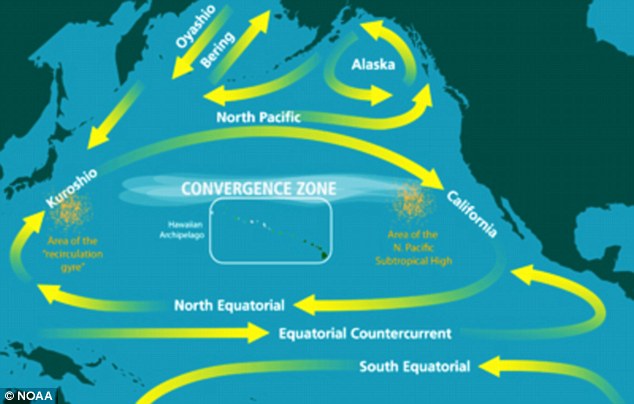
The Pacific Ocean Is Dying

How about the rest of the Pacific Ocean? What does the future hold in store for the largest body of water on Earth. One that circulates more water than any other ocean and possesses more coastline than all the others put together. The following headlines portend the future health of the Pacific, so all are encouraged to take serious notice.


The upshot of each of these articles is that the Pacific Ocean is extremely vulnerable to the radioactive waste being dumped into her waters at Fukushima. Should another catastrophic earthquake occur, it could create a new and more complicated nuclear disaster scenario that is truly irreparable. Even without any seismic activity affecting the nuclear sites, the current state of affairs has taken for granted that the Pacific Ocean will become a nuclear dumping ground for decades to come. It has not been lost on us that such an inevitability appears to be the only practical expedient available.

We are truly saddened by the great loss of marine life and harm to myriad aquatic and shoreline ecosystems. As the nuclear radiation is exported around the Asian Ring of Fire, genetic mutation will begin to affect every form of life — from phytoplankton to whales, from seabirds to mangroves, from dolphins to krill. Everything that lives near the Pacific will be at risk to some degree. Anyone who lives, works or plays in or around the Pacific will be compelled to evaluate their relationship to this great ocean.
What have we done to Mother Earth by siting nuclear power plants in the most seismically active region of the world?!

What in God’s Creation can possibly be done to fix it?
Never in the history of humankind has the planet been confronted with such a grave set of circumstances. Fukushima represents all that can go wrong when scientific applications and technological advancement within a crude industrial context have gone awry. Unfortunately, given the many trajectories that numerous fields of technological innovation are currently on, Fukushima and the BP Gulf oil spill of 2012 may only be the beginning of an accelerating period of technospheric breakdown which will plague the Earth.

Author’s Note:
NuclearReader.info has provided an invaluable service to the worldwide internet community by giving away their ebook currently linked here: http://www.nuclearreader.info/. The first chapter entitled “Hazards of Low Level Radioactivity” ought to be a must read for anyone impacted by Fukushima. Also of critical significance, there is a phenomenon known as the Photoelectric Effect which weighs heavily throughout the entire contamination zone associated with the Fukushima nuclear disaster. The following article gives an important overview for those who want to know what we are really dealing with as a planetary civilization.


Addendum
:
There has been no mention in this essay of the massive amount of debris pollution brought about by the Japan earthquake and tsunami of March, 2011. We have chosen a photo-documentary instead to portray the current state of affairs in various locations throughout the Pacific Ocean.

Special Notice:
The following article gives a much broader view of the current predicament which prevails across the planet. Clearly, technospheric breakdown is a phenomenon which few foresaw, otherwise we would not find ourselves at the edge of the precipice with respect to so many risky and dangerous technologies and misapplications of scientific developments.
For example, so committed is the world community to the hydrocarbon fuel paradigm that there appears to be no way of lessening our dependence on such an environmentally destructive energy source. Likewise, even in the face of Fukushima, many nations are unwilling to reconsider their dependence on the nuclear power paradigm.

This essay elucidates the forces and motivations at work which militate against sound, rational and safe energy policy.#Link

‘Wave’ of highly-radioactive waste reportedly headed for West Coast of U.S.

For the Japanese people, the Fukushima disaster represents the complete demise of their nation, as literally nothing is being done to contain the thousands of exposed fuel rods that will eventually explode when Reactor 4 fails. But the consequences of all this are not limited to just Japan, as the rest of the world, including the U.S., will bear the brunt of this ticking nuclear time-bomb as well. We are, in fact, already suffering the consequences of this “nuclear war without a war” (http://globalresearch.ca/index.php?context=va&aid=28870).

Late last year, for example, it was reported that U.S. officials ordered the Tokyo Electric Power Company (TEPCO) to release three million gallons of radioactive waste into the Pacific Ocean. Now, according to The Intel Hub, this waste will soon arrive on the shores of the U.S. West Coast, unbeknownst to the millions of Americans living in that region that will be exposed to it.

This new ‘wave’ of radiation is, of course, in addition to previous waves that have already killed thousands of people, many of whom were children, and sparked a considerable uptick in cancer cases. And as time goes on, more and more people living in America will begin to develop chronic conditions as a result of perpetual radiation poisoning from Fukushima, and many will die, all while the mainstream media remains willfully silent on the issue.

And the federal government has known all along that the Fukushima disaster is shaping up to be the most severe global catastrophe in recorded history, as was evidenced in a recent Freedom of Information Act (FOIA) request. Not only were federal authorities aware of the extreme dangers posed by Fukushima from the early days of the disaster, but they also orchestrated misinformation campaigns to keep the American people, and the rest of the world, in the dark about the truth (http://www.naturalnews.com/035847_plumegate_Fukushima_radiation.html).

Since neither the U.S. nor the Japanese governments appear willing to actually deal with Fukushima, and particularly the Reactor 4 situation, NaturalNews is calling on the United Nations (U.N.) to take swift action. A new petition urges the U.N. to organize a Nuclear Security Summit to address the problem of Reactor 4, and also establish an independent assessment team to somehow stabilize it and prevent its fuel from potentially destroying all life on earth.#Link
(Pak Alert Press)

Pakistan Cyber Force

Friday, May 4, 2012

Energy Crisis Looms: Japan Closes Last Nuclear Reactor

Print Friendly and PDF

Hokkaido Electric Power Co.'s Tomari nuclear
power plant is seen in Tomari town on Japan's
northern island of Hokkaido (Reuters / Kyodo)
Japan is set to shut down its last operational nuclear plant following last year’s Fukushima meltdown disaster. However, with a giant energy quota to fill and no viable substitute, many predict a nuclear-free future will be short-lived. The Hokkaido electric company closes down its Tomari plant, the last of Japan’s 53 atomic power stations, on Saturday, leaving a country-already dependent on foreign fuel imports -without nuclear energy. Since the earthquake and tsunami caused a triple meltdown last March at the Fukushima Daiichi plant, the Japanese government has been gradually de-commissioning and closing plants throughout the country.

The government has faced increasing pressure from environmental groups to abandon nuclear energy following the Fukushima catastrophe. It forced tens of thousands of Japanese from their homes after dangerous levels of radiation contaminated local food and water supplies. The decision to turn away from nuclear energy is a controversial one in resource-poor Japan. Prior to the March 2011 disaster the country drew approximately 30 per cent of its energy from nuclear power, a figure that was expected to rise to 50 per cent by 2030 to meet exploding energy demands. The energy vacuum is set to incur shortfalls and power cuts this summer, with supplies falling short by 14 per cent in Tokyo and up to 16 per cent in western Japan.

"I have to say we are facing the risk of a very severe electricity shortage,"
said Economy, Trade and Industry Minister Yukio Edano in April. He added that rising fuel imports would be felt by the Japanese taxpayer.
­

Japan bites off more than it can chew?

As it stands the transfer to a non-nuclear energy infrastructure will be very costly as Japan will have no choice but to step-up its fuel imports. Preliminary figures from the international energy agency increase oil-demand to 4.5 barrels a day, costing an additional $100 million, a bleak prospect for an economy that reported its biggest ever trade deficit in 2011.

Elderly women shout slogans as they wave banners during a demonstraton denouncing nuclear power plants (AFP Photo / Toru Yamanaka)
Elderly women shout slogans as they wave banners
during a demonstraton denouncing nuclear power
plants (AFP Photo / Toru Yamanaka)
The Japanese Finance Ministry said its deficit had risen to $50 billion because of the extra fuel imports needed to compensate for the lack of nuclear energy.
Environmental groups see the closure of the country’s last operational plant as an opportunity to wean Japan off atomic energy and follow the German model. However, creating the infrastructure for green energy will take time and significant investment. Currently, Japan gets around 8 per cent of its energy from renewable sources and is looking to raise that figure to over 25 per cent by 2030.

Many have criticized Japan’s plans as too ambitious and view the reactivation of the country’s power plants as inevitable in spite of public protest. Dr. Howard Hayden, Professor of Physics at Connecticut University, said that Japan “will probably go back to nuclear in due time because money talks.” “It’s costing them very dearly. They haven’t got nearly enough electricity and they have actually called on some factories to cut back their operations quite a bit,” said Hayden. He added that some factories in the North of Japan had been effectively shut down because of power shortages. “Eventually they will probably restart most of their reactors. The ones that are in possible danger of tsunamis, they’ll of course either shut down completely or build some much better protective walls around them”, Hayden concluded.
(RT)
Enticing Fury
Pakistan Cyber Force

Monday, April 23, 2012

Japan: Two blasts destroy chemical plant (VIDEO)

Print Friendly and PDF

A dramatic video shows the moment a massive explosion struck a chemical plant in south-west Japan. At least one person was killed and some 17 injured as two blasts hit the facility on Sunday. The blasts happened at Mitsui Chemicals in Yamaguchi prefecture after workers tried to shut down part of the plant following a problem in a different sector. The first explosion occurred at 2am local time killing a 22-year old worker and injuring 11 others. The second blast took place few hours later but did not hurt anyone.
The flames were brought under control about 15 hours after the second explosion. Hundreds of nearby homes were damaged and at least six people injured by glass fragments, NHK reports. Officials say there has been no toxic leak.
(RT)
Enticing Fury
Pakistan Cyber Force

Monday, April 16, 2012

40 Million Japanese to be evacuated from Eastern Japan, Tokyo included; Japan asks Russia to return Kuril Islands

Print Friendly and PDF


A new report circulating in the Kremlin today prepared by the Foreign Ministry on the planned re-opening of talks with Japan over the disputed Kuril Islands during the next fortnight states that Russian diplomats were “stunned” after being told by their Japanese counterparts that upwards of 40 million of their peoples were in “extreme danger” of life threatening radiation poisoning and could very well likely be faced with forced evacuations away from their countries eastern most located cities… including the world’s largest one, Tokyo.


The Kuril Islands are located in Russia’s Sakhalin Oblast region and stretch approximately 1,300 km (810 miles) northeast from Hokkaidō, Japan, toKamchatka, Russia, separating the Sea of Okhotsk from the North Pacific Ocean. There are 56 islands and many more minor rocks. It consists of Greater Kuril Ridge and Lesser Kuril Ridge, all of which were captured by Soviet Forces in the closing days of World War II from the Japanese.


The “extreme danger” facing tens of millions of the Japanese peoples is the result of the Fukushima Daiichi Nuclear Disaster that was a series of equipment failures, nuclear meltdowns, and releases of radioactive materials at the Fukushima I Nuclear Power Plant, following the Tōhoku earthquake and tsunami on 11 March 2011.


According to this report, Japanese diplomats have signaled to their Russian counterparts that the returning of the Kuril Islands to Japan is “critical” as they have no other place to resettle so many people that would, in essence, become the largest migration of human beings since the 1930’s when Soviet leader Stalin forced tens of millions to resettle Russia’s far eastern regions.


Important to note, this report continues, are that Japanese diplomats told their Russian counterparts that they were, also, “seriously considering” an offer by China to relocate tens of millions of their citizens to the Chinese mainland to inhabit what are called the “ghost cities,” built for reasons still unknown and described, in part, by London’s Daily Mail News Service in their 18 December 2010 article titled “The Ghost Towns Of China: Amazing Satellite Images Show Cities Meant To Be Home To Millions Lying Deserted” that says:
“These amazing satellite images show sprawling cities built in remote parts of China that have been left completely abandoned, sometimes years after their construction. Elaborate public buildings and open spaces are completely unused, with the exception of a few government vehicles near communist authority offices. Some estimates put the number of empty homes at as many as 64 million, with up to 20 new cities being built every year in the country’s vast swathes of free land.”
Foreign Ministry experts in this report note that should Japan accept China’s offer, the combined power of these two Asian peoples would make them the largest super-power in human history with an economy larger than that of the United States and European Union combined and able to field a combined military force of over 200 million. To how dire the situation is in Japan was recently articulated by Japanese diplomat Akio Matsumura who warned that the disaster at the Fukushima nuclear plant may ultimately turn into an event capable of extinguishing all life on Earth.


According to the Infowars.Com News Service:
“Matsumura posted [this] startling entry on his blog following a statement made by Japan’s former ambassador to Switzerland, Mitsuhei Murata, on the situation at Fukushima.Speaking at a public hearing of the Budgetary Committee of the House of Councilors on 22 March 2012, Murata warned that “if the crippled building of reactor unit 4 – with 1,535 fuel rods in the spent fuel pool 100 feet (30 meters) above the ground – collapses, not only will it cause a shutdown of all six reactors but will also affect the common spent fuel pool containing 6,375 fuel rods, located some 50 meters from reactor 4,” writes Matsumura.In both cases the radioactive rods are not protected by a containment vessel; dangerously, they are open to the air. This would certainly cause a global catastrophe like we have never before experienced. He stressed that the responsibility of Japan to the rest of the world is immeasurable. Such a catastrophe would affect us all for centuries. Ambassador Murata informed us that the total numbers of the spent fuel rods at the Fukushima Daiichi site excluding the rods in the pressure vessel is 11,421.”

Disturbingly, the desperate situation facing Japan is, also, facing the United States as Russian military observers overflying the USZ this week as part of the Open Skies Treaty are reporting “unprecedented” amounts of radiation in the Western regions of that country, a finding that was further confirmed by scientists with the Woods Hole Oceanographic Institute who have confirmed that a wave of highly radioactive waste is headed directly for the USZ west coast.


Important to note is that this new wave of Fukushima radiation headed towards the USZ is in addition to earlier radiation events that American scientists are now blaming for radioactive particles from Japan being detected in California kelp.


Though the news of this ongoing global catastrophe is still being heavily censored in the USZ, the same cannot be said about Japan, and as recently reported by the leading Japanese newspaper The Mainichi Daily News that reports:
“One of the biggest issues that we face is the possibility that the spent nuclear fuel pool of the No. 4 reactor at the stricken Fukushima No. 1 Nuclear Power Plant will collapse. This is something that experts from both within and outside Japan have pointed out since the massive quake struck. TEPCO, meanwhile, says that the situation is under control. However, not only independent experts, but also sources within the government say that it’s a grave concern.The storage pool in the No. 4 reactor building has a total of 1,535 fuel rods, or 460 tons of nuclear fuel, in it. The 7-story building itself has suffered great damage, with the storage pool barely intact on the building’s third and fourth floors. The roof has been blown away. If the storage pool breaks and runs dry, the nuclear fuel inside will overheat and explode, causing a massive amount of radioactive substances to spread over a wide area. Both the U.S. Nuclear Regulatory Commission (NRC) and French nuclear energy company Areva have warned about this risk.A report released in February by the Independent Investigation Commission on the Fukushima Daiichi Nuclear Accident stated that the storage pool of the plant’s No. 4 reactor has clearly been shown to be “the weakest link” in the parallel, chain-reaction crises of the nuclear disaster. The worse-case scenario drawn up by the government includes not only the collapse of the No. 4 reactor pool, but the disintegration of spent fuel rods from all the plant’s other reactors. If this were to happen, residents in the Tokyo metropolitan area would be forced to evacuate.”

Even though this crisis in Japan has been described as “a nuclear war without a war,” and the USZ Military is being reported is now stocking up on massive amounts of anti-radiation pills in preparation for nuclear fallout, there remains no evidence at all the ordinary peoples are being warned about this danger in any way whatsoever.
(WhatDoesItMean)

Enticing Fury
Pakistan Cyber Force

Monday, October 17, 2011

Israhell behind Fukushima Sabotage: Japanese Top Journalist uncovers the hidden reality

Print Friendly and PDF


A leading Japanese journalist recently made two incredible claims about the Fukushima power plant that suffered a nuclear meltdown in March 2011, sending shockwaves around the world. First, the former editor of a national newspaper in Japan says the USZ and Israhell knew Fukushima had weapons-grade uranium and plutonium that were exposed to the atmosphere after a massive tsunami wave hit the reactor. Second, he  contends that Israhelli intelligence sabotaged the reactor in retaliation for Japan’s support of an independent Palestinian state.

According to Yoishi Shimatsu, a former editor of Japan Times Weekly, these nuclear materials were shipped to the plant in 2007 on the orders of Dick Cheney and George W. Bush, with the connivance of Israhelli Prime Minister Ehud Olmert. The shipment was in the form of warhead cores secretly removed from the USZ nuclear warheads facility BWXT Plantex near Amarillo, Texas. While acting as the middleman, Israhell transported warheads from the port of Houston, and in the process kept the best ones while giving the Japanese older warhead cores that had to be further enriched at Fukushima.

Shimatsu credits retired CIA agent and mercenary Roland Vincent Carnaby with learning the warheads were being transported from Houston. In a strange twist, Carnaby was mysteriously shot dead less than a year later by Houston police at a traffic stop. He was shot once in the back and once in the chest. He did not have a weapon in his hands. Intelligence sources said he had been tracking a Mossad unit that was smuggling USZ plutonium out of Houston docks for an Israeli nuclear reactor.

In an even more explosive charge, the journalist says that 20 minutes before the Fukushima plant’s nuclear meltdown, Israhell was so upset with Japanese support for a Palestinian declaration of statehood that it double-crossed Japan by unleashing the Stuxnet virus on the plant’s  computers. The virus hampered the shutdown, leading to fallout from a section of the plant housing uranium and plutonium retrieved from the warheads supplied in 2007.

While it is impossible to verify some of Shimatsu’s claims, there was a massive cover-up at the time of the Fukushima disaster in March.  Explosions at the site were immediately downplayed. While it was subsequently reported that three reactors suffered meltdowns, Japanese authorities tried to rate the disaster as a Level 4 on the International Nuclear and Radiological Event Scale, although outside experts declared it a 7, which is the highest level.

Something worth noting is how in 2009, two years after Shimatsu says the warheads were secretly moved to Japan, the International Atomic Energy Agency (IAEA) issued a veiled warning to Japan not to abandon its anti-nuclear weapons policy.

The IAEA had to know, however, that Japan has long retained the potential to build nuclear weapons. That was made clear as far back as 1996 when a leaked Ministry of Foreign Affairs document exposed how Japan had been promoting a dual strategy in respect to nuclear weapons since the mid-1960s. It would often publicly profess a non-nuclear policy while maintaining the ability to build a nuclear arsenal. The Liberal Democratic Party, which has dominated Japanese politics, has always said there is no constitutional impediment to nukes.

A factor that undoubtedly would have encouraged the Bush-Cheney White House to provide Japan with the means to secretly build nukes was the growing power of China. Cheney and Bush sought to arm Japan and India with nuclear weapons as a means of curbing China.

( Richard Walker - American Free Press )

Wednesday, September 21, 2011

Typhoon Roke hits Japan, headed for crippled Fukushima Nuclear Plant

Print Friendly and PDF


A powerful typhoon struck Japan’s main island on Wednesday, stranding thousands of commuters in Tokyo and threatening to pour heavy rain on the stricken Fukushima Daiichi nuclear plant in the nation’s tsunami-ravaged northeast. Evacuation advisories went out to more than 1 million people across the main island of Honshu as torrential downpours caused flash floods in low-lying areas. As of Wednesday evening, five people had been found dead and four others were missing, according to Japan’s national broadcaster, N.H.K. The storm, called Typhoon Roke, directly hit greater Tokyo, briefly shutting down Japan’s commercial and political center. Strong winds and rains brought most subways and commuter trains to at least a temporary halt, stranding tens of thousands at stations. Bullet train and airline service was canceled.

Wednesday, August 31, 2011

Fukushima Cesium Leakage spikes up to equivalent of 168 Hiroshima Bombs

Print Friendly and PDF


The Fukushima Nuclear plant on fire in Japan
Fukushima is now far and away the worst nuclear disaster in all of human history. Chernobyl was a Sunday picnic compared to Fukushima and the amount of cesium-137 released at Fukushima this year so far is equivalent to 168 Hiroshima bombs.

The crisis at Fukushima is far, far worse than you have been told.  We are talking about multiple self-sustaining nuclear meltdowns that will not be fully contained for years.  In an attempt to keep people calm, authorities in Japan (and around the rest of the world as well) have lied and lied and lied.  Over the months that have passed since the disaster began, small bits of the truth have slowly started to come out.  Authorities are finally admitting that the area immediately surrounding Fukushima will be uninhabitable indefinitely, and they are finally admitting that the amount of radioactive material that has been released is far higher than initially reported.  It is going to take the Japanese years to fully contain this problem.  Meanwhile, Fukushima will continue to blast all of us with high levels of cesium, strontium and plutonium and will slowly kill millions of people around the globe for years to come.

These days, the mainstream media does not talk about Fukushima much.  The reality is that there have been a whole lot of other disasters for them to talk about. But just because Fukushima is a nightmare that is playing out in very slow motion does not mean that it does not deserve our full attention. To get an idea of just how nightmarish Fukushima has turned out to be, just consider the words of nuclear expert Steven C. Jones.
By way of comparison, the Chernobyl nuclear disaster that occured in 1986 in the Ukraine, Russia- heretofore the worst nuclear disaster on record- burned for 10 days and cumulatively killed an estimated 1 million people worldwide. The Fukushima, Japan nuclear disaster has 5 nuclear reactors burning, 2 in partial meltdown and 3 in full meltdown- and they’ve ALL been uncontrollably burning since March 11th. Its been over 3 months and this nuclear disaster remains completely out of control. In fact, some industry estimates cite the possibility that these meltdowns will be contained (optimistically) in 1-3 years, at the very earliest.
The amount and intensity of the radioactive fallout from this particular nuclear disaster will assuredly kill hundreds of millions of people worldwide over time. Japan itself is, of course, the epicenter of this radioactive contamination that has spread out from these reactors.
Keep in mind that radioactivity from the Chernobyl disaster deeply contaminated 77,000 square miles. So if Fukushima is many times worse, what does that mean for us? Just recently, authorities in Japan confessed that the amount of cesium-137 released by Fukushima is equivalent to 168 of the nuclear bombs that were dropped on Hiroshima. The following is a brief excerpt from a recent article in the Telegraph.
Japan’s government estimates the amount of radioactive caesium-137 released by the Fukushima nuclear disaster so far is equal to that of 168 Hiroshima bombs.
I am no nuclear expert, but shortly after the Fukushima disaster began I postulated that much of northern Japan would be rendered uninhabitable by all of this radiation. Well, it turns out that authorities in Japan have finally reached the same conclusion.  According to the New York Times, the Japanese government is acknowledging that large areas around the Fukushima nuclear facility may be uninhabitable for decades.
Broad areas around the stricken Fukushima Daiichi nuclear plant could soon be declared uninhabitable, perhaps for decades, after a government survey found radioactive contamination that far exceeded safe levels, several major media outlets said Monday.
So what is the big deal?
Unfortunately, most people do not have any concept of just how dangerous nuclear contamination can be. At this point, the vast majority of people living in the northern hemisphere have been exposed to radioactive material from Fukushima. We can’t see them, but radioactive particles can do an insane amount of damage.  We can breathe them in, we can eat them in our food and we can even absorb them through our skin.  Once trapped inside our bodies, these particles can slowly “bake” us for years and years.  The following is from an opinion piece by Helen Caldicott in the Guardian.
Internal radiation, on the other hand, emanates from radioactive elements which enter the body by inhalation, ingestion, or skin absorption. Hazardous radionuclides such as iodine-131, caesium 137, and other isotopes currently being released in the sea and air around Fukushima bio-concentrate at each step of various food chains (for example into algae, crustaceans, small fish, bigger fish, then humans; or soil, grass, cow’s meat and milk, then humans). [2] After they enter the body, these elements – called internal emitters – migrate to specific organs such as the thyroid, liver, bone, and brain, where they continuously irradiate small volumes of cells with high doses of alpha, beta and/or gamma radiation, and over many years, can induce uncontrolled cell replication – that is, cancer. Further, many of the nuclides remain radioactive in the environment for generations, and ultimately will cause increased incidences of cancer and genetic diseases over time.
One of the most dangerous radioactive elements being released at Fukushima is strontium.  Strontium accumulates in the bones and in the teeth.  It is also known to cause cancer in humans. It has been estimated that approximately 80 percent of the strontium that was released during the Chernobyl nuclear disaster entered the food cycle. Considering the vast amount of strontium that has been released at Fukushima, that is a very frightening statistic. The following is what NHK World recently had to say about the levels of strontium that are being found around Fukushima.
The utility detected up to 480 becquerels of radioactive strontium 90 per kilogram of soil. That’s about 100 times higher than the maximum reading recorded in Fukushima Prefecture following atmospheric nuclear tests carried out by foreign countries during the Cold War era. TEPCO reported detecting 2,800 becquerels of strontium 89 per kilogram of soil at the same location.
Once you absorb strontium, it will stay in your bones for the rest of your life.  Just consider what Dr. Russell Blaylock recently told Newsmax.
When we look at Chernobyl, most of West Germany was heavily contaminated. Norway, Sweden. Hungary was terribly contaminated. The radiation was taken up into the plants. The food was radioactive. They took the milk and turned it into cheese. The cheese was radioactive.
That’s the big danger, the crops in this country being contaminated, the milk in particular, with Strontium 90. That radiation is incorporated into the bones and stays for a lifetime.
So would you like to have radioactive material in your bones that affects your health for the rest of your life? It may have already happened to you and you wouldn’t even know it. Other deadly radioactive elements that are being released at high levels at Fukushima include iodine, cesium, uranium and plutonium.  Large amounts of these radioactive particles have already been absorbed in the soil and in the water in the United States of Zionism. Large amounts of these radioactive particles have also entered our food chain. As the years go by, a whole lot of Americans are going to get sick and die and they will never even know that it was Fukushima that caused it. Remember, just because you cannot see these radioactive particles does not mean that they aren’t incredibly deadly.  Just check out what nuclear expertSteven C. Jones recently had to say about plutonium.
To give one an example of how lethal radiation is, one pound of plutonium evenly distributed into everyone’s lungs would kill every man, woman and child on Earth. There are literally “tons” of radioactive plutonium (among other radioactive elements) that have been released into the air and ocean environments since March 11th. Another critical fact to remember is that radioactive plutonium, for example, remains lethal (killing life) for thousands years as it has a half-life of 24,000 years. Some other radioactive elements such as uranium have a half-life of 4.47 billion years.
That is the scary thing with many of these radioactive elements.  Now that they have been released, many of them will be with us for as long as we live, for as long as our children live and for as long as our grandchildren live. Yes, things are much worse than you have been told. Up until now, the Japanese government has insisted that those living outside the 20 kilometer exclusion zone are safe. But is that really the case? According to Reuters, Greenpeace has found incredibly high levels of radiation at schools up to 60 km away.
Greenpeace said on Monday that schools and surrounding areas located 60 km (38 miles) from Japan’s tsunami-hit nuclear power plant were unsafe for children, showing radiation readings as much as 70 times internationally accepted levels.
In addition, a recent Japan Times article noted that high levels of cesium have been discovered at 42 incineration plants in seven different prefectures in Japan.
High levels of cesium isotopes are cropping up in dust at 42 incineration plants in seven prefectures, including Chiba and Iwate, an Environment Ministry survey of the Kanto and Tohoku regions shows.
The horrendous Fukushima fire

Also, a recent article in the Wall Street Journal stated that incredibly high levels of cesium-137 have been found up to 100 km away from the Fukushima nuclear facility.
The first comprehensive survey of soil contamination from the Fukushima Daiichi nuclear plant showed that 33 locations spread over a wide area have been contaminated with long-lasting radioactive cesium, the government said Tuesday.
The survey of 2,200 locations within a 100-kilometer (62-mile) radius of the crippled plant found that those locations had cesium-137 in excess of 1.48 million becquerels per square meter, the level set by the Soviet Union for forced resettlement after the 1986 Chernobyl disaster, Japanese authorities said.
Remember that Tokyo is only about 250 km away from the Fukushima nuclear facility. So what happens if high levels of cesium start showing up in Tokyo? According to some sources, things have already gotten very serious in Tokyo. Dr. Chris Busby recently traveled to Japan with some very sophisticated testing equipment and found one sample in Tokyo that had levels of radioactivity that were higher than the exclusion zone surrounding Chernobyl during that nuclear disaster.

But things are much worse for those living much closer to Fukushima.  High levels of cesium have been detected in the urine and in the breast milk of those living in the region surrounding the facility.  All over the area there are reports of people coming down with the symptoms of radiation sickness. The truth is that the “evacuation area” should be far, far larger than it is now.  Just consider what Mike Adams of Natural News recently had to say about what recent tests have shown.
One soil sample taking 25 kilometers away from Fukushima showed Cesium-137 exceeding 5 million becquerels per square meter. This level, of course, makes it uninhabitable by humans, yet both the Japanese and USZ. governments continue to downplay the whole event, assuring their sheeple that there’s nothing to worry about. By their logic, since all the people are sheeple anyway, as long as the area is safe enough for sheep, it’s also safe enough for the human population.
A lot of people in Japan are going to die, and frustrations are rising.  According to an article in The Independent, a lot of Japanese feel totally abandoned by their government at this point.
It is the fate of people outside the evacuation zones, however, that causes the most bitter controversy. Parents in Fukushima City, 63km from the plant, have banded together to demand that the government do more to protect about 100,000 children. Schools have banned soccer and other outdoor sports. Windows are kept closed. “We’ve just been left to fend for ourselves,” says Machiko Sato, a grandmother who lives in the city. “It makes me so angry.”
But just because you don’t live in Japan does not mean that you are not in danger.  The Fukushima nuclear facility sits right on the Pacific Ocean.  When nuclear material gets released into the air at Fukushima, the first time much of it will encounter land is when it reaches the United States of Zionism. Also, thousands upon thousands upon thousands of tons of highly radioactive water has been released into the Pacific Ocean at Fukushima. What this is going to do to our oceans nobody knows for sure.  But according to the Los Angeles Times, the seawater near Fukushima has been found to be incredibly radioactive….
Tokyo Electric Power Co. had said Tuesday that it had found iodine-131 at 7.5 million times the legal limit in a seawater sample taken near the facility, and government officials instituted a health limit for radioactivity in fish. Other samples were found to contain radioactive cesium at 1.1 million times the legal limit.
All of this radioactive water is going to circulate all over the globe.  It is going to be a nightmare that is never going to end. Just because the mainstream media is not talking much about all of this radiation does not mean that it is not affecting the United States of Zionism.
  • Radiation from Fukushima has been detected in seaweed in Puget Sound.
  • Radiation from Fukushima has been detected in the drinking water in numerous states.
  • Radiation from Fukushima has been discovered in milk in numerous states.
  • Very high levels of radiation continue to be detected in rainwater in the northwest United States of Zionism.
This is a slow motion nightmare that is going to play out for years and years. Some nuclear experts claim that it could be up to 50 or 100 years before any of the nuclear material at the Fukushima complex will cool down enough to be removed from the facility. Right now there is no viable solution to what is going on at Fukushima, so it will continue to blast all of us with high levels of radiation and will slowly kill millions of people around the globe for years to come. Former nuclear industry insider Arnold Gundersen recently put it this way.
“With Three Mile Island and Chernobyl, and now with Fukushima, you can pinpoint the exact day and time they started,” he said, “But they never end.”
This is a nightmare that will be with us for the rest of our lives.  Millions are going to get sick and untold numbers of people are going to slowly die.

( Originally posted at End of American Dream )


Edited by Enticing Fury
Pakistan Cyber Force
Follow PCF on Facebook

Follow PCF on Twitter

Related Posts Plugin for WordPress, Blogger...