Pakistan Cyber Force: Allah's Justice

Top stories

Pakistan Cyber Force [Official]

Showing posts with label Allah's Justice. Show all posts

Monday, November 12, 2012

Post-Sandy: Hundreds of Thousands still without Electricity in USZ East Coast

Print Friendly and PDF

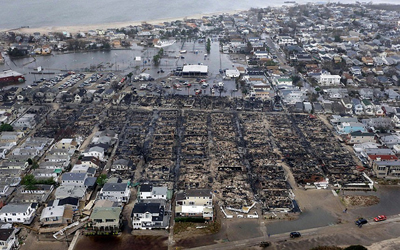
Two women embrace while waiting to board buses
to return to salvage items from their homes
damaged by Hurricane Sandy in Seaside Heights,
New Jersey November 11, 2012.
(Reuters / Eric Thayer)
Residents of the northeastern US lashed out at a local utility company for its inability to restore power or provide information some two weeks after the region was hit by the deadly Hurricane Sandy. ­More than 120,000 New York and New Jersey residents remain without power as the Long Island Power Authority (LIPA) has failed to repair the grid connecting tens of thousands of homes and businesses to power.

LIPA estimates that 50,000 properties were still powerless on Sunday while another 55,000 couldn't be connected to the grids, as extensive flooding in the area damaged the wiring and equipment. Cold and frustrated customers are becoming angrier as the power firm failed to answer their calls and provide some sort of a deadline for the electricity supply to resume.

"I was so disgusted the other night," said Carrie Baram of Baldwin Harbor, New York, who said she calls the utility three times a day. "I was up till midnight, but nobody bothered to answer the telephone." "We are sitting in a cold house. No one comes by," said John Mangin of Levittown, New York. "There should be criminal charges against the CEO and the executive board of LIPA for failure to do their jobs."

Photo from twitter.com user @MattMinerXVX
LIPA claims to be fully aware of the lack of information to its customers, and has partly blamed an outdated information technology system for the problem. The company's officials have promised to set up information centers near the most heavily damaged areas. The firm has also said that some 6,400 linemen are working to fix the problem – thirty times more than on any normal day.

"We certainly understand the frustration that's out there," LIPA's chief operating officer, Michael Hervey, said in a conference call late Sunday. But, he said, the storm had been worse than expected, no utility had as many workers in place beforehand as it would have liked, and the power was coming back rapidly "compared to the damage that's been incurred."
 
The company has promised to restore power to 99 percent of its customers by Tuesday. But people are still tweeting, "u better not send me a bill this month" and "day 14 still no power – living house to house with 3 very young kids and dog. When will LIPA help us! " Those visiting the Big Apple were shocked to see the power outage. "Flying into my beloved New York tonight the pilots flew us over big patches of still dark areas. I actually cried. LIPA, where are you???", another tweeted.

New York Governor Andrew Cuomo has called an investigation of the company, criticizing it for bad management. On Friday, two congressmen asked the federal government to help LIPA restore power. "It’s a totally disorganized effort, and LIPA unfortunately seems to have lost control of the situation – and that’s why you see so many people becoming so angry," Representative Peter King said Saturday. It is estimated that more than eight million people have lost power after Hurricane Sandy.

­
An ice-cream truck providing power for a house. Photo from twitter.com user @mattgunn
­
Photo from twitter.com user @mhbraverman
­
A woman prepares food to be handed out to victims of Hurricane Sandy, in the Rockaway Beach neighborhood of Queens, New York, November 10, 2012.(Reuters / Andrew Burton)
Pakistan Cyber Force

Sunday, November 11, 2012

Desperate for Shelters: New York to turn Jail Cells into Homes

Print Friendly and PDF

People affected by Superstorm Sandy wait in the
cold outside an aid distribution site (John Moore/Getty
Images/AFP)
With nowhere else to go, New Yorkers displaced by Hurricane Sandy may have no choice but to sleep in jails. As hundreds of thousands remain without power, a Staten Island prison may serve as a temporary home for storm victims. ­About 100,000 homes and businesses will remain without power for the next several months, New York Governor Andrew Cuomo said Friday in a news conference. About 434,140 homes are currently still without power in the region that was in Hurricane Sandy’s path – mostly in New York and New Jersey. The second storm, a nor’easter that hit the region last week, brought snow and frigid temperatures to a city already devastated by the effects of the first storm.

With the Federal Emergency Management Agency (FEMA) having only provided housing to two dozen of 5,200 applicants, thousands remain without a home as the winter months approach. As many as 40,000 New Yorkers are in need of shelter from extreme weather and rapidly decreasing temperatures, the city estimates. The city is in desperate need for shelter – so desperate that even a desolate jail is being considered a possibility, the New York Post reports. The Arthur Kill Correction Facility on Staten Island may serve as a temporary home for up to 900 displaced victims of the storm. The medium-security prison was closed last December and with some fixing up, it could once again be fully functional.

“It’s empty. They might as well use it,” 39-year-old Rob Conigatti, who lost his home and is living with family, told the Post. The prison currently lacks boilers and a working wastewater system, but would be repaired, probably with generators installed, before serving as housing.
Arthur Kill Correction Facility (Image from www.bridgeandtunnelclub.com)
The problem with the emergency housing facility is the stigma associated with sleeping in a prison. Some people refuse to sleep in a jail cell because of what it once was. Some – especially senior citizens – are afraid of sleeping next to homeless people and substance abusers who are also likely to check into the free housing facilities. “I lost everything, but I still have my pride,” said 44-year-old Wally Martinez. “We don’t have to stay in a prison. My brother was once in that very prison, and my mother used to visit him regularly. She used to tell me how miserable he looked and how filthy and disgusting that prison was.”

There are currently 2,700 evacuees living in emergency city shelters. While New York City officials have not made a decision on the use of the prison, and the Staten Island Borough President is strongly opposed to it, Councilman James Oddo supports the initiative. “We have not got into the discussion of longer-term transitional housing,” he said. “If there is no other viable option, it shouldn’t be taken off the table because of a quote-unquote stigma. Between being cold and having people dry, in a warm, secure place, I know what my choice is.”

Staten Island Senator Andrew Lanza also said the prison was being considered as a possible transitional site, even though newly appointed press liaison Peter Spencer said Tuesday that the facility “is not on the table” as a temporary shelter. As lawmakers and city officials weigh the need for housing against the situation and the options, the prison could very soon undergo repairs and be turned into a place to live.

100,000 homes, business face months without power

Long-term housing facilities like the Staten Island prison may be crucial in the months ahead: New York Governor Andrew Cuomo said some properties are so damaged that it will be a long time before electrical service is restored. Although power has returned to 96 percent of the region, about 100,000 customers will likely go several months without power. “You have people without power for a very long time,” he said. “It’s gotten cold. It’s uncomfortable.” Mayor Michael Bloomberg on Friday estimated that as many as 30,000 people in damaged homes will need temporary housing to survive the winter.

Most of the severely damaged homes are on Long Island’s South Shore, on Staten Island and the Rockaways district of New York City's Queens department.
“You have some people who have buildings and have homes that you cannot turn on the power until that building or home is repaired or replaced,” Cuomo said. “Those are going to be the most difficult situations." FEMA will pay for expedited repairs in damaged homes starting November 13. The Empire State Relief Fund, put together by Cuomo, will also distribute cash for rebuilding homes. But until the thousands of displaced New Yorkers are able to return to heated homes, they will be forced to find alternate housing, and those with nowhere to go may choose to spend the night in jail.
(RT)
Pakistan Cyber Force

Saturday, November 10, 2012

New Yorkers, Welcome to the Third World! (Thanks to Sandy)

Print Friendly and PDF

New York Mayor Bloomberg signed an emergency order today to “establish an odd-even license plate system” for gas rationing in an effort to bring order back to the long lines waiting for gas.  This was highly reminiscent to me of my travel in Ecuador in the late 90’s, when mile-long lines would result on the streets of Quito if the tankers weren’t getting paid to offload fuel in the port of Guayaquil.

The shortage of gas in New York appears to be affected principally by two dynamics:
  1. A real reduction in the supply of fuel being imported into the region and refined. Of the 57 import terminals in the affected region, 8 were reported as still not operational as of Thursday.  In addition, Sandy reduced refinery productivity by 308,000 barrels per day in New Jersey, temporarily crippling Bayway, New Jersey’s largest refinery and idling a Port Reading refinery as well.
  2. The human psychological response akin to a run on the bank.  If you don’t know when you are going to get gasoline again, you might as well get as much as you can, even if you may not need it for a while.
On Thursday, an estimated 28% of New York metro area gas stations were not pumping fuel (or could not be contacted), according to the Energy Information Administration.  While critical, it’s a big improvement from Wednesday’s 38%.

Sandy damaged fuel import terminals in the NY area, which was a critical blow since the port of NY is the most important petroleum hub in the northeastern U.S.  In particular, Hess still has four marine terminals with suspended operations.  It also reported that it does not yet have an estimate as to when its 70,000 barrel per day Port Reading , NJ refinery will come back on line, as full commercial power has not yet been restored.  In addition, Phillips 66 announced Monday that its 238,000 barrel per day Bayway refinery – the area’s second largest plant – would be shut for another two to three weeks.

In a very uncomfortable way, Sandy points out the dangers of our devotion to economic efficiency: when you engineer your economy to cut out waste, you design with lowest costs in mind, and redundancy is eliminated.  You rely on sophisticated systems to provide just-in-time inventory.  You cut your utility budgets to the bone in order to keep electricity bills at a minimum.  You cut costs everywhere, because that’s what people want.  And all of that works just fine until something – a storm, a tsunami, some unanticipated Black Swan throws a monkey wrench into the finely tuned, highly calibrated economy.

One moment all is fine.  The next minute, ATMs don’t work.  Gasoline pumps don’t function.  The lights don’t come on.  And the entire machine breaks down.  Suddenly, the recently arrived immigrants from developing cities like Quito, Lagos, and Kuala Lumpur who are used to making ends meet and surviving as a way of life in cities with broken infrastructures seem to be the ones better able to cope.  And those of us who have lived our whole lives expecting the trains to run on time, money to come out of a machine, and the lights to come on don’t quite know what to do, and we are deeply unnerved by it.
(forbes.com)
Pakistan Cyber Force

Thursday, November 8, 2012

Storm Athena Slams USZ East Coast - Thousands more lose power [Photos]

Print Friendly and PDF

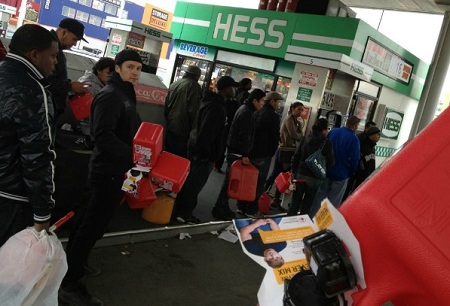
People wait on line to buy gasoline during a
Nor’Easter snowstorm on November 7, 2012 in
the Brooklyn borough of New York City
(Mario Tama / Getty Images / AFP)
A winter storm has left thousands across the USZ East Coast without power, adding to the 640,000 already under blackouts after Hurricane Sandy. Residents fear more damage as the storm hits the storm-pummeled northeast with heavy wind, snow and rain.

An estimated 60,000 people lost electricity as the nor’easter, named Athena by the National Weather Service, moved through New Jersey, New York and Connecticut. Residents were urged to evacuate flooded areas on Wednesday night, and the storm is predicted to last well into Thursday.

New York, New Jersey, eastern Pennsylvania and Connecticut have seen snowfall up to eight inches in some areas. Airports in New York and New Jersey have already cancelled more than 1,700 flights. Several parks were also closed throughout New York and New Jersey over fears of falling trees, and many schools canceled classes.

Snow covers a fallen tree in a neighborhood which was left destroyed by Hurricane Sandy in the Staten Island borough of New York November 7, 2012 (Reuters / Adrees Latif)
A nor’easter does not have the destructive force of Sandy, which killed more than 110 people in the USZ, cut power to 8.5 million homes and flooded New York City and the New Jersey coast. The winter storm still poses a danger, however, because it is hitting areas already devastated by Sandy, increasing the risk of further flooding.

“We're petrified,” James Alexander told USZ Today. Alexander lives in the hard-hit Rockaways section of New York City’s Queens borough. “It's like a sequel to a horror movie.” The storm has also stalled post-Sandy repairs, preventing emergency workers from dealing with the hurricane’s impact.

Pedestrians walk through high winds and snow at Union Square on November 7, 2012 in New York City (John Moore / Getty Images / AFP)
A woman hails a taxi while braving high winds and snow near Union Square on November 7, 2012 in New York City (John Moore / Getty Images / AFP)
Pedestrians walk through high winds and snow at Union Square on November 7, 2012 in New York City. The city was hit by a Nor′Easter storm, just ten days after Superstorm Sandy ravaged the tri-state area (John Moore / Getty Images / AFP)
Pedestrians walk through high winds and snow at Union Square on November 7, 2012 in New York City. The city was hit by a Nor'Easter storm, just ten days after Superstorm Sandy ravaged the tri-state area (John Moore / Getty Images / AFP)
A man walks in the snow during the Nor’Easter, also known as a northeaster storm, in Jersey City, New Jersey November 7, 2012 (Reuters / Eduardo Munoz)
A man rides his bike as a firefighter truck attends to a call as it snows during the Nor’Easter, also known as a northeaster storm, in Jersey City, New Jersey November 7, 2012 (Reuters / Eduardo Munoz)
Wheels marks are seen on a street covered with snow during the nor′easter, also known as a northeaster storm, in Jersey City, New Jersey November 7, 2012 (Reuters / Eduardo Munoz)
Wheels marks are seen on a street covered with snow during the nor'easter, also known as a northeaster storm, in Jersey City, New Jersey November 7, 2012 (Reuters / Eduardo Munoz)
A man walks with his dogs under snow during the arrival of Nor′easter, also known as a northeaster storm, in Jersey City, New Jersey, November 7, 2012 (Reuters / Eduardo Munoz)
A man walks with his dogs under snow during the arrival of Nor'easter, also known as a northeaster storm, in Jersey City, New Jersey, November 7, 2012 (Reuters / Eduardo Munoz)
People stand on a destroyed section of boardwalk to check the storm′s approach as a Nor’Easter arrives in the Rockaway neighborhood on November 7, 2012 in the Queens borough of New York City (Mario Tama / Getty Images / AFP)
People stand on a destroyed section of boardwalk to check the storm's approach as a Nor’Easter arrives in the Rockaway neighborhood on November 7, 2012 in the Queens borough of New York City (Mario Tama / Getty Images / AFP)
People wait on line to buy gasoline during a Nor’Easter snowstorm on November 7, 2012 in the Brooklyn borough of New York City (Mario Tama / Getty Images / AFP)
(RT)
Pakistan Cyber Force

Tuesday, November 6, 2012

Chaos Hits NY, NJ; Citizens arming with Shotguns, Bats, Bows, Machetes amid Rampant Looting

Print Friendly and PDF

An extremely volatile situation in New York and New Jersey following the devastation of superstorm Sandy is getting worse by the day, with civil society deteriorating so rapidly that residents are arming themselves with anything and everything they can, including shotguns, baseball bats, machetes – even bows and arrows.

With looting getting worse and authorities stretched thin, “hardened New Yorkers are ready to battle lowlife criminals to protect their homes and stores in storm-ravaged areas” hit hard by break-ins and pilfering, the New York Post reported.

Residents in Staten Island, Coney Island and other boroughs are complaining that they have been forgotten by emergency responders and city authorities, as evidenced by the dramatic rise in criminal activity. That has forced residents in the most beleaguered parts of the city to load up guns, sharpen machetes, and brandish a host of other weapons as a show of force against predators.

One resident, Jacinto Gonzalez, 42, armed himself with a baseball bat and stood guard outside his two-story rowhouse located on West 27th Street, near Neptune Avenue, with his family nearby.

Desperate residents using anything they can find as a weapon
Another Coney Island resident, Roberto Aviles, was seen brandishing a rusting, three-foot-long machete and warning that he had a gun as well. Having lived on Coney Island with his wife since 1995, Aviles said he was ready to take on criminals, singling out phony burglars who were posing as employees of the local power company, Con Edison. “I’m prepared inside here,” Aviles, 76, told the Post, showing off his machete.

A resident of the Coney Island Houses, Chris Lane, 50, assembled a small arsenal to repel looters and criminals, including a double pump action shotgun. He told the paper he had already scared off a group of thugs lurking around the hallways of his building when Sandy came roaring through the city Monday evening.

“They were roving in packs, not just one or two people. I had more than a little something, too,” said Lane, referring to his weapons. “I let it be known that my floor is off-limits.” Outside a home in Long Beach, L.I., a signed summed up what weary New Yorkers were feeling: “Looters will be shot by local vet.”

Another sign in a different neighborhood says, “Block protected by Smith & Wesson,” a reference to the firearm maker. “It’s chaos; it’s pandemonium out here,” Chris Damon, a resident of the Rockaways in Queens, which continues to struggle without power or assistance, told Britain’s Daily Telegraph. “It seems like nobody has any answers,” he added. “I feel like a victim of Hurricane Katrina. I never thought it could happen here in New York but it’s happened.”

The paper noted:
With little police presence on the storm-ravaged streets, many residents of the peninsula have been forced to take their protection into their own hands, arming themselves with guns, baseball bats and even bows and arrows to ward off thugs seeking to loot their homes.
So much for gun control…
The worsening chaos has led many New Yorkers to change their behavior in ways they never thought they would have to. “We booby-trapped our door and keep a baseball bat beside our bed,” Danielle Harris, 34, told the New York Daily News. Keone Singlehurst, a local surfer, said he stockpiled anything he could – knives, a machete and a bow and arrow.

“I would take a looter with a boa if a felt threatened I would definitely use it,” he said. “It’s like the wild west. A borderline lawless situation.” Knives, machetes, bows and arrows. Do you wonder how many New Yorkers and New Jersey residents who once supported gun control laws and shunned firearms for personal protection have now changed their minds? James Sanders, a city councilman, senses the growing frustration. He knows that what is occurring – the lack of support, the lawlessness, the growing anarchy – is waiting to boil over.

“We have an explosive mix here,” he told the Daily News. “People will take matters into their own hands.” But his anger is directed at the Long Island Power Authority, the electric company serving L.I. He says the council needs to investigate why they have, as he says, ignored the Rockaways for nearly a week. “LIPA has failed the people of the Rockaways,” he said. “It’s a question of class… serving the richer areas of Long Island and ignoring the Rockaways.”
Really, Mr. Sanders?

Here’s a question for him and his fellow councilmen that the people of their borough should be asking: “What did you do to prepare the community for the most destructive storm in many generations?” Turnabout is fair play, Mr. Sanders.

The best answer was the first answer – Be prepared
I won’t let him off the hook for politicizing this disaster and pointing his finger of blame at someone else. But I will give him a little breathing room with some cold, hard truth. The fact is there is no way that Long Island – or any of the hardest hit areas – could have ever prepared for this kind of storm. It’s not logistically possible. It’s not economically possible.

Cities, townships and boroughs should take a lesson from this storm and prepare as best they can for the next time – perhaps stockpile food, water, gasoline at underground locations – but there will never be enough resources to fully prepare for storms of this magnitude. So the best solution is the one Natural News has been advising for years: Personal preparedness. And even then, people need to have a Plan B – as in, what happens if I lose my house and all the preparation stuff I have in it? Where will I go then? What will I do?

Too many people in Sandy’s wake who thought they were prepared did not have a Plan B. Now they are suffering like the rest. Those of us who are warm and dry right now need to be paying particular attention to the worsening situation in New York and New Jersey and learning from it – before it happens to us and we are thrown into a similar situation. Especially if you live in a big city.

Sources:
http://www.nypost.com
http://www.dailymail.co.uk
http://www.nydailynews.com
(PrisonPlanet.com)
Pakistan Cyber Force

Monday, November 5, 2012

Another Storm on its way to Already Devastated USZ East Coast

Print Friendly and PDF

NEW YORK - United States of Zionism's East Coast residents struggling to pick up the pieces after Superstorm Sandy confronted new challenges: plummeting temperatures and the looming threat of another strong storm on Wednesday.

Forecasters say a bout of bad weather could bring biting wind, rain and possibly even snow to the region, which is reeling from the impact of Sandy.

The USZ Weather Channel said that there was the likelihood of “very windy, rainy and cold” weather from Wednesday into Thursday in the USZ northeast where recovery process is underway. The report said the new storm will not be more violent than Sandy, which had a severe impact in New York and the neighbouring state of New Jersey.

Potential impacts from the storm could include wind gusts as high as 50 miles per hour, the report said. Also, a storm surge and wave action could cause minor to moderate coastal flooding and beach erosion along the mid-Atlantic and New England coast.

The threat for coastal flooding will be primarily during the high tides on Wednesday night for the mid-Atlantic. From New York City into New England, the high tides Wednesday night and Thursday have the greatest threat for flooding.

Snow is expected across interior sections, especially in higher elevations. The snow is possible as far south as northern Virginia. Weather officials say: "Our suite of computer model guidance continues to advertise a significant East Coast storm that will impact the coastal areas with strong winds and heavy rainfall late Wednesday through Friday. Steps should begin now to prepare for these impacts."

The storm would not be anywhere as destructive as Sandy, but could cause some new erosion and hinder recovery efforts, officials said.

Pakistan Cyber Force

Sunday, November 4, 2012

No Food, No Power, No Fuel - Unrest hits New York, New Jersey in Sandy's Aftermath

Print Friendly and PDF

The first 72 hours after a natural disaster are the “polite” hours. Residents operate under the illusion that Big Government will soon save them with emergency supplies: food, water, fuel, clothing and more. So they follow the rules and “play nice.”

After about the third day, all those social niceties start to erode. People are hungry and angry. There’s a feeling of desperation and even abandonment. What seemed to be a polite society two days earlier suddenly becomes more sinister. The survival needs of individuals begin to outweigh social boundaries, and what emerges is desperation… even panic.

“Dwindling gasoline supplies are causing frayed nerves as the region endures its third full day with massive power outages.” reports Fox News. “Frustration with gas supplies topped the list of issues causing tensions to boil over in New Jersey, New York and Connecticut, the states hardest hit by power outages in the wake of superstorm Sandy. Residents jockeyed for fuel at the few stations still pumping, searched store shelves in vain for batteries, struggled with sporadic cell phone service and found themselves unable to buy necessities at supermarkets.”

State troopers have now been deployed to gas stations in an effort to head off near-riots as citizens lose patience and tempers flare.


On Twitter, fist fights are being reported over fuel shortages. Police have had to draw guns on some people, reports Brietbart.com. That article includes posts from Twitter users:
  • You know things are bad when you ask the gas station attendent “when do you think you’re going to get more gas?” and he just laughs at you. – Prede (@predederva) November 1, 2012
  • Just awful! RT @metrogypsy: Someone just pulled a knife at Greenpoint #gas station as line stretches with hours long wait #gettingrealFAST – Camila Xavier (@camilaxavier) November 1, 2012
  • Watching the breakdown of society at a gas station on Long Island. #sandysucks – Christina (@wooly_says) November 1, 2012
There are also tweets from some users who are intelligent preppers… like this one from JohnnyRH:
  • I live in Utah and the people here are big into “prepping”… I have relatives in NJ and just last week we were talking and they thought I was nuts to own guns, store fuel and water and have a generator. Most people are totally blind to what chaos will come with a really large power grid failure over half or all of the country. It will take little more than a week for all hell to break loose and riots will be the norm.
“We’re going to DIE!”
Another report from ABC News reveals the desperation and panic now forming among residents in Staten Island.
“We’re going to die! We’re going to freeze! We got 90-year-old people!” Donna Solli told visiting officials. “You don’t understand. You gotta get your trucks down here on the corner now. It’s been three days!”
The situation is so bad that even the Red Cross is being blamed for not showing up with supplies:
“This is America, not a third world nation. We need food, we need clothing,” Staten Island Borough President Jim Molinaro said today. “My advice to the people of Staten Island is: Don’t donate to the American Red Cross. Put their money elsewhere.” (ABC News)
NBC News reports:
Staten Island officials had some choice words Thursday to describe what they said was a feeble disaster-relief response to people left dying, homeless and hungry in the New York City borough hit particularly hard by Sandy. Staten Island’s top elected official blasted the American Red Cross response as “an absolute disgrace” and went so far as to urge its residents not to donate to the largely volunteer agency.

No gas for a week, no power for two
This situation, by the way, is only going to get FAR WORSE before it gets better. CNBC reports gas shortages will continue for at least a week, possibly longer. That’s seven more days even while desperation has already taken hold on day three!

And power? Con Edison says it will be another 10 days before power is restored to the majority of customers currently in the dark. As long as the power is out, gas stations can’t pump gas, and that means continued gas shortages. That, in turn, means more desperation, starvation and even panic as residents can’t use vehicles to acquire food and supplies. The American way of life, remember, is almost unimaginable without gasoline. Half the population seems physically incapable of walking anywhere these days, and almost nobody own bicycles anymore.

Things are going to get a lot worse over the next few days
What happens when millions of people packed into high-density cities can’t get food, fuel or electricity? People get desperate, of course. Desperation is about to set in. In the days ahead, you’re going to see more fights and even weapons brought to bear in real-life survival scenarios. The federal government will predictably fail to reach people with the help they need, and people who neglected to prepare will find themselves in ever-more-desperate circumstances. This is a time when nearly everybody suddenly realizes gee, it sure would have been smart to have been a prepper.

What’s the value of having emergency food, fuel, a water filter, batteries and a fully loaded Remington shotgun in the hours after a superstorm? Priceless.

Preparedness is the solution
What’s the solution to all this frustration and panic? Preparedness.
If the people of Staten Island or NYC had been prepared for the storm that they knew was approaching, they wouldn’t be in a state of desperation right now!
If they had stored some of their own food, fuel, water and emergency supplies, they wouldn’t be panicked for the Red Cross to show up and save them.
If they had intelligently planned ahead and taken action based on the seven days of dire weather predictions that preceded the storm, they wouldn’t need to beg for big government to bail them out!

The answer to disasters like Sandy is to be a prepper.

Preppers are the new prophets
In the wake of Sandy, preppers suddenly seem like geniuses. While being ridiculed by the rest of the population for as long as we can all remember, preppers are the ones still standing in the aftermath of the storm.

They’re the ones you don’t see on the news, begging for help and panicking over the situation, because the preppers are sitting in their homes, eating their stored food, drinking their filtered water, double-checking their shotgun loads and staying off the streets. Preppers are the ones NOT looting, NOT complaining about the Red Cross, and NOT diving in dumpsters to find food while waiting around for the government to show up and save them.

Pakistan Cyber Force

Wednesday, October 31, 2012

America Destroyed by Sandy - 10 million+ Lose Electricity - States Reduced to Ruins

Print Friendly and PDF

NEW YORK — President Barack Obama declared a major disaster in the New York City area Tuesday as Superstorm Sandy pounded the East Coast, killing at least 38 people, sweeping homes into the ocean, flooding large swaths of coastal areas, crippling public transit, and leaving more than 10 million without power. As the East Coast woke up, residents faced the prospect of up to a week without heat, light or refrigeration, while authorities tried to measure the full wrath of the once-in-a-generation hurricane.

The storm weakened as it moved further inland but forecasters still warned of gale-force winds and flooding along the densely-populated coast, where a massive fire broke out in New York City and a levee broke in New Jersey. At least 38 people were killed in the United States and Canada as the storm roared ashore late Monday, pounding several major cities with heavy rain and hurricane-force winds that toppled trees and ripped down power lines.

President Obama declared a ‘major disaster’ had hit the states of New York and New Jersey, an order that cleared the way for federal grants and loans to help storm victims acquire temporary housing and repair damage. Seawater coursed between the iconic skyscrapers of New York’s financial district in lower Manhattan, flooding subways and road tunnels and shorting out the power grid, leaving a half-million households and businesses in the dark.

Further south, the sea surged over vast swathes of the eastern seaboard, turning coastal cities into ghost towns as the high winds grounded flights and shut down rail links, public transport and government offices. The catastrophe completely overshadowed the US election race, forcing a halt to campaigning a week before Americans were due to go to the polls to choose between President Obama and challenger Mitt Romney.

Hurricane Sandy had killed 67 people as it tore through the Caribbean, and reports of more deaths began to arrive after it made landfall at 8:00 pm (0000 GMT) in New Jersey and began to wreak havoc in the United States. A massive fire destroyed at least 50 homes in Breezy Point, a seaside community in Queens, New York. Firefighters had difficulty reaching the blaze due to the severe weather. The cause of the fire was not immediately known. Authorities had ordered hundreds of thousands of residents in areas from New England to North Carolina to evacuate their homes and seek shelter, but many chose to stay on, to the frustration of police and local officials.

Falling trees tore down power cables, plunging what weather experts said were millions of homes into darkness, while storm warnings cut rail links and marooned tens of thousands of travellers at airports across the region. The hurricane sent a record storm surge of 13.7 feet into lower Manhattan, flooding seven major subway tunnels used by hundreds of thousands of daily commuters and swamping cars in the financial district. “The New York City subway system is 108 years old, but it has never faced a disaster as devastating as what we experienced last night,” city transport director Joseph Lhota said early Tuesday.

Firefighters meanwhile struggled to contain a massive blaze in the Queens borough that destroyed more than 50 homes, and in northern New Jersey police in boats pulled residents from second-storey windows after a levee broke. Hours earlier, a power sub-station exploded in a burst of light captured by amateur photographers as a massive blackout left much of Manhattan, and some 500,000 homes across New York City, in darkness. The floodwaters had begun to recede early Tuesday, but the Con Edison power company said it could take a week to completely restore power.

Disaster estimating firm Eqecat forecast that Sandy would affect more than 60 million Americans, a fifth of the population, and cause up to $20 billion in damage. Refineries closed and major arteries such as New York’s Holland Tunnel were shut to traffic. The operator of two major New Jersey nuclear plants said they might have to be closed, threatening half of the state’s power supply.

The New York Stock Exchange, the Nasdaq and the futures markets in Chicago were closed for Monday and Tuesday, along with federal government offices and the entire Amtrak rail network on the eastern seaboard. Obama urged Americans to heed local evacuation orders as he stepped off the campaign trail and spent the day in the White House helping to coordinate the response to the disaster. “The election will take care of itself next week,” Obama said. “Right now, our number one priority is to make sure that we are saving lives... and that we respond as quickly as possible to get the economy back on track.”

Both the Democratic incumbent and his Republican rival Romney were keen to display resolute leadership in the face of the storm, given the memory of Hurricane Katrina in 2005. Romney also cancelled some campaign appearances.
Former president George W Bush was widely seen as having bungled the handling of Katrina, which devastated New Orleans. The failure of authorities in the ensuing emergency response tainted the rest of his presidency. The United Nations, which closed its headquarters in New York on Monday, has again cancelled all meetings and conferences scheduled for Tuesday because of the huge damage and disruptions.

In an attempt to lessen damage from saltwater to the subway system and the electrical network beneath the city’s financial district, New York City’s main utility cut power to about 6,500 customers in lower Manhattan. But a far wider swath of the city was hit with blackouts caused by flooding and transformer explosions. The surge hit New York City hours after a construction crane atop a luxury high-rise collapsed in the wind and dangled precariously 74 floors above the street. Forecasters said the wind at the top of the building may have been close to 95 mph. Airlines cancelled more than 12,000 flights, disrupting the plans of travellers all over the world.

Storm damage was projected at $10 billion to $20 billion, meaning it could prove to be one of the costliest natural disasters in US history. Ten deaths were reported in New Jersey, New York, West Virginia, Pennsylvania and Connecticut. Some of the victims were killed by falling trees. At least one death was blamed on the storm in Canada. “We are looking at the highest storm surges ever recorded” in the Northeast, said Jeff Masters, meteorology director for Weather Underground, a private forecasting service. “The energy of the storm surge is off the charts, basically.”

In Maryland, at least 100 feet of a fishing pier at the beach resort of Ocean City was destroyed, and Gov. Martin O’Malley said there would be devastating flooding from the swollen Chesapeake Bay. “There will be people who die and are killed in this storm,” he said. Meanwhile, two US nuclear power plants were shut down early Tuesday in the aftermath of Superstorm Sandy, but the plant operators stressed there were no risks to the public. New Jersey’s main power company PSEG Nuclear shut down its Salem 1 unit on the Delaware River, saying most of its water circulation pumps had been rendered unusable ‘due to weather impacts’.

PSEG said it manually shut down the 1,175 MW unit, but said there were “no issues” in the shutdown and the facility was “currently stable.” The Salem 2 unit was already offline for maintenance when the storm hit, and PSEG said another nearby nuclear unit, Hope Creek, remains operating at full power. In New York, power generator Entergy shut down a unit of its Indian Point nuclear facility “due to external electrical grid issues.” Another unit remained at full power, and Entergy said on Twitter that there was “no risk” to the public or company employees. Late Monday, the Nuclear Regulatory Commission said it was monitoring all plants in the US northeast as Sandy pushed up water levels in rivers and bays, which are crucial for cooling operations at the facilities.

The Oyster Creek plant in New Jersey, which was in a regularly scheduled outage when the storm hit, set off an alert when floodwaters exceeded a threshold set for its water intake facilities. Wet snow and high winds spinning off the edge of Superstorm Sandy spread blizzard conditions over parts of West Virginia and neighbouring Appalachian states Tuesday, shutting one interstate as trucks and cars bogged down and knocking out power to many. The National Weather Service said a foot and more of snow was reported in lower elevations of West Virginia, where most towns and roads are. High elevations in the mountains were getting more than two feet and a blizzard warning for parts of the state was in effect until Wednesday afternoon.

More than 205,000 customers in West Virginia were without power early Tuesday. In Elkins, a city of about 7,000 people, power went out across town before dawn and the only lights were from passing snow plows as heavy, wet flakes piled up to about 8 inches. Staff Reporter from Islamabad adds: The Ministry of Foreign Affairs has directed Pakistan’s Ambassador to US Sherry Rehman and Counsel General in New York to reach out to Pakistani expatriates to tell them to stay vigilant and follow the safety precautions laid out by the US authorities after the devastation caused by the storm.

Accordingly, Pakistan Embassy and other missions a number of steps have been taken to stay in touch with expatriate Pakistanis in the affected States. The Embassy and the Consulate General have approached key Pakistani community members through phone and email and urged them to remain vigilant and take all necessary safety precautions as laid out by their respective district governments and to approach the nearest emergency centre whenever needed. According to the decision of the US Government to declare a State of emergency in Washington and to close all offices, the Embassy has also been closed. However, all the concerned staff is on standby to respond to any contingency if required.

Pakistan Cyber Force

America Destroyed by Sandy - 10 million+ Lose Electricity - States Reduced to Ruins

Print Friendly and PDF

NEW YORK — President Barack Obama declared a major disaster in the New York City area Tuesday as Superstorm Sandy pounded the East Coast, killing at least 38 people, sweeping homes into the ocean, flooding large swaths of coastal areas, crippling public transit, and leaving more than 10 million without power. As the East Coast woke up, residents faced the prospect of up to a week without heat, light or refrigeration, while authorities tried to measure the full wrath of the once-in-a-generation hurricane.

The storm weakened as it moved further inland but forecasters still warned of gale-force winds and flooding along the densely-populated coast, where a massive fire broke out in New York City and a levee broke in New Jersey. At least 38 people were killed in the United States and Canada as the storm roared ashore late Monday, pounding several major cities with heavy rain and hurricane-force winds that toppled trees and ripped down power lines.

President Obama declared a ‘major disaster’ had hit the states of New York and New Jersey, an order that cleared the way for federal grants and loans to help storm victims acquire temporary housing and repair damage. Seawater coursed between the iconic skyscrapers of New York’s financial district in lower Manhattan, flooding subways and road tunnels and shorting out the power grid, leaving a half-million households and businesses in the dark.

Further south, the sea surged over vast swathes of the eastern seaboard, turning coastal cities into ghost towns as the high winds grounded flights and shut down rail links, public transport and government offices. The catastrophe completely overshadowed the US election race, forcing a halt to campaigning a week before Americans were due to go to the polls to choose between President Obama and challenger Mitt Romney.

Hurricane Sandy had killed 67 people as it tore through the Caribbean, and reports of more deaths began to arrive after it made landfall at 8:00 pm (0000 GMT) in New Jersey and began to wreak havoc in the United States. A massive fire destroyed at least 50 homes in Breezy Point, a seaside community in Queens, New York. Firefighters had difficulty reaching the blaze due to the severe weather. The cause of the fire was not immediately known. Authorities had ordered hundreds of thousands of residents in areas from New England to North Carolina to evacuate their homes and seek shelter, but many chose to stay on, to the frustration of police and local officials.

Falling trees tore down power cables, plunging what weather experts said were millions of homes into darkness, while storm warnings cut rail links and marooned tens of thousands of travellers at airports across the region. The hurricane sent a record storm surge of 13.7 feet into lower Manhattan, flooding seven major subway tunnels used by hundreds of thousands of daily commuters and swamping cars in the financial district. “The New York City subway system is 108 years old, but it has never faced a disaster as devastating as what we experienced last night,” city transport director Joseph Lhota said early Tuesday.

Firefighters meanwhile struggled to contain a massive blaze in the Queens borough that destroyed more than 50 homes, and in northern New Jersey police in boats pulled residents from second-storey windows after a levee broke. Hours earlier, a power sub-station exploded in a burst of light captured by amateur photographers as a massive blackout left much of Manhattan, and some 500,000 homes across New York City, in darkness. The floodwaters had begun to recede early Tuesday, but the Con Edison power company said it could take a week to completely restore power.

Disaster estimating firm Eqecat forecast that Sandy would affect more than 60 million Americans, a fifth of the population, and cause up to $20 billion in damage. Refineries closed and major arteries such as New York’s Holland Tunnel were shut to traffic. The operator of two major New Jersey nuclear plants said they might have to be closed, threatening half of the state’s power supply.

The New York Stock Exchange, the Nasdaq and the futures markets in Chicago were closed for Monday and Tuesday, along with federal government offices and the entire Amtrak rail network on the eastern seaboard. Obama urged Americans to heed local evacuation orders as he stepped off the campaign trail and spent the day in the White House helping to coordinate the response to the disaster. “The election will take care of itself next week,” Obama said. “Right now, our number one priority is to make sure that we are saving lives... and that we respond as quickly as possible to get the economy back on track.”

Both the Democratic incumbent and his Republican rival Romney were keen to display resolute leadership in the face of the storm, given the memory of Hurricane Katrina in 2005. Romney also cancelled some campaign appearances.
Former president George W Bush was widely seen as having bungled the handling of Katrina, which devastated New Orleans. The failure of authorities in the ensuing emergency response tainted the rest of his presidency. The United Nations, which closed its headquarters in New York on Monday, has again cancelled all meetings and conferences scheduled for Tuesday because of the huge damage and disruptions.

In an attempt to lessen damage from saltwater to the subway system and the electrical network beneath the city’s financial district, New York City’s main utility cut power to about 6,500 customers in lower Manhattan. But a far wider swath of the city was hit with blackouts caused by flooding and transformer explosions. The surge hit New York City hours after a construction crane atop a luxury high-rise collapsed in the wind and dangled precariously 74 floors above the street. Forecasters said the wind at the top of the building may have been close to 95 mph. Airlines cancelled more than 12,000 flights, disrupting the plans of travellers all over the world.

Storm damage was projected at $10 billion to $20 billion, meaning it could prove to be one of the costliest natural disasters in US history. Ten deaths were reported in New Jersey, New York, West Virginia, Pennsylvania and Connecticut. Some of the victims were killed by falling trees. At least one death was blamed on the storm in Canada. “We are looking at the highest storm surges ever recorded” in the Northeast, said Jeff Masters, meteorology director for Weather Underground, a private forecasting service. “The energy of the storm surge is off the charts, basically.”

In Maryland, at least 100 feet of a fishing pier at the beach resort of Ocean City was destroyed, and Gov. Martin O’Malley said there would be devastating flooding from the swollen Chesapeake Bay. “There will be people who die and are killed in this storm,” he said. Meanwhile, two US nuclear power plants were shut down early Tuesday in the aftermath of Superstorm Sandy, but the plant operators stressed there were no risks to the public. New Jersey’s main power company PSEG Nuclear shut down its Salem 1 unit on the Delaware River, saying most of its water circulation pumps had been rendered unusable ‘due to weather impacts’.

PSEG said it manually shut down the 1,175 MW unit, but said there were “no issues” in the shutdown and the facility was “currently stable.” The Salem 2 unit was already offline for maintenance when the storm hit, and PSEG said another nearby nuclear unit, Hope Creek, remains operating at full power. In New York, power generator Entergy shut down a unit of its Indian Point nuclear facility “due to external electrical grid issues.” Another unit remained at full power, and Entergy said on Twitter that there was “no risk” to the public or company employees. Late Monday, the Nuclear Regulatory Commission said it was monitoring all plants in the US northeast as Sandy pushed up water levels in rivers and bays, which are crucial for cooling operations at the facilities.

The Oyster Creek plant in New Jersey, which was in a regularly scheduled outage when the storm hit, set off an alert when floodwaters exceeded a threshold set for its water intake facilities. Wet snow and high winds spinning off the edge of Superstorm Sandy spread blizzard conditions over parts of West Virginia and neighbouring Appalachian states Tuesday, shutting one interstate as trucks and cars bogged down and knocking out power to many. The National Weather Service said a foot and more of snow was reported in lower elevations of West Virginia, where most towns and roads are. High elevations in the mountains were getting more than two feet and a blizzard warning for parts of the state was in effect until Wednesday afternoon.

More than 205,000 customers in West Virginia were without power early Tuesday. In Elkins, a city of about 7,000 people, power went out across town before dawn and the only lights were from passing snow plows as heavy, wet flakes piled up to about 8 inches. Staff Reporter from Islamabad adds: The Ministry of Foreign Affairs has directed Pakistan’s Ambassador to US Sherry Rehman and Counsel General in New York to reach out to Pakistani expatriates to tell them to stay vigilant and follow the safety precautions laid out by the US authorities after the devastation caused by the storm.

Accordingly, Pakistan Embassy and other missions a number of steps have been taken to stay in touch with expatriate Pakistanis in the affected States. The Embassy and the Consulate General have approached key Pakistani community members through phone and email and urged them to remain vigilant and take all necessary safety precautions as laid out by their respective district governments and to approach the nearest emergency centre whenever needed. According to the decision of the US Government to declare a State of emergency in Washington and to close all offices, the Embassy has also been closed. However, all the concerned staff is on standby to respond to any contingency if required.

Pakistan Cyber Force

Tuesday, October 30, 2012

Sandy Devastation: Alert declared for Oyster Creek Nuclear Plant

Print Friendly and PDF

As we explained earlier today, the Oyster Creek plant in New Jersey is most likely to be affected by Hurricane Sandy.
At around 8:30 p.m. tonight, the USZ Nuclear Regulatory Commission declared an “Alert” action level for a nuclear power plant in Oyster Creek, New Jersey:
The USZ Nuclear Regulatory Commission is continuing to monitor impacts from Hurricane Sandy on nuclear power plants in the Northeastern United States, including an Alert declared at the Oyster Creek nuclear power plant in New Jersey. The plant, currently in a regularly scheduled outage, declared the Alert at approximately 8:45 p.m. EDT due to water exceeding certain high water level criteria in the plant’s water intake structure.
An Alert is the second lowest of four NRC action levels. The Alert was preceded by an Unusual Event, declared at approximately 7 p.m. EDT when the water level first reached a minimum high water level criteria. Water level is rising in the intake structure due to a combination of a rising tide, wind direction and storm surge. It is anticipated water levels will begin to abate within the next several hours.
AP reports:
The plant’s owner, Exelon Corp., said power was also disrupted in the station’s switchyard, but backup diesel generators were providing stable power, with more than two weeks of fuel on hand.
And Reuters notes:
The NRC spokesman said if the flood waters continued to rise, it could affect the reactor’s service water pumps, which are used for shut-down cooling and to cool the spent-fuel pool.
Since the plant was already shut for refueling, the NRC spokesman said the company could use water from the fire hose to cool the spent-fuel pool if necessary.
See this for details on the spent fuel pools at Oyster Creek.
Update from Reuters:
Water levels at the plant rose by more than 6.5 feet, potentially affecting the pumps that circulate water through the plant, an NRC spokesman said.
***
A further rise to 7 feet [only 6 more inches?] could submerge the service water pump motor that is used to cool the water in the spent fuel pool.
The spokesman said the company could use water from a fire hose to cool the pool if necessary. The used uranium rods in the pool could cause the water to boil within 25 hours without additional coolant; in an extreme scenario the rods could overheat, risking the eventual release of radiation.
(InfoWars)
Pakistan Cyber Force

Saturday, June 30, 2012

Arrest Warrant Issued for MNA Ali Musa Gilani

Print Friendly and PDF

An arrest warrant was issued for Ali Musa Gilani, son of former premier Yousuf Raza Gilani, on Saturday for his alleged role in ephedrine import case. Under the warrant, anti-narcotics force (ANF) can enter any compound to arrest MNA Musa Gilani. Media reports said the ANF officials obtained search warrant for Gilani from Civil Judge Rawalpindi Shafqatullah. The ANF officials pleaded the court that they were finding it difficult to arrest Musa Gilani in banned chemical case and asked for search operation. The judge, granting the search warrant, asked the ANF to arrest Gilani and bring him before the court. Earlier, an anti-narcotics court (ANC) had issued an arrest warrant for the Multan-based legislator. The other accused, Makhdoom Shahabuddin, is on an interim bail till July 3.
Pakistan Cyber Force

Related Posts Plugin for WordPress, Blogger...