Pakistan Cyber Force: Indian propaganda

Top stories

Pakistan Cyber Force [Official]

Showing posts with label Indian propaganda. Show all posts

Tuesday, July 26, 2011

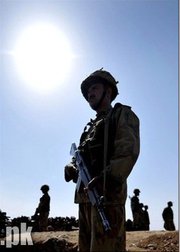
Muslim Ummah's Pride Pakistan Army - A Force To Be Reckoned With

Print Friendly and PDF


The situation today has made it clear of who stands on which side, deciding to support which agenda in political, economic and military aspects of our nation. People living in or out of Pakistan have been criticizing the Army And ISI; the two pillars on which Pakistan is standing after all the indignant acts of our politicians, the people purchased by them and our innumerable enemies who have disguised themselves in order to infiltrate between us to weaken our vision of optimistically working for the prosperity of Pakistan and introducing the rightful system of caliphate. The media is doing the best it can to literally murder our ideology but it's only the weak who get deviated. By the grace of Allah we have been blessed with one of the finest armies in the world who continue to have an incredible performance today and throughout history even when outnumbered.

Pakistan Army maintained division and brigade strength presences in some of the Arab countries during the past Arab-Israhelli Wars, and aided the Coalition in the first Gulf War. Other major operations undertaken by the Army include Operation Black Thunderstorm and Operation Rah-e-Nijat. Apart from conflicts, the Army has been an active participant in UN missions and played a major role in rescuing trapped American soldiers from Mogadishu, Somalia in 1993 in Operation Gothic Serpent.


Kashmir War in 1948 convinced India that Pakistan is certainly not an easy target. The Indian Cabinet in New Delhi had decided to destroy and undo Pakistan by economic and military means which resulted in a full-scale war. On August 1948, the first anniversary of Pakistan, General Headquarters sent the following message to Quaid-e-Azam Muhammad Ali Jinnah: " Loyal and grateful greetings from the Army on the first anniversary of Pakistan. We serve and shall serve Pakistan with all our hearts and souls. Pakistan and its Creator  Zindabad."  On  14th December India was taken by surprise in a pre-attack artillery bombardment the Beri Pattan bridge area containing ammunition, rations, petrol and supplies in a two-mile area was totally destroyed together with Indian divisional Headquarter, isolating the Indian forces in that sector.

On 30 December, India asked for ceasefire with effect from 1 January 1949 which was accepted as now the fate of Jammu and Kashmir was taken over by the UN. However, India didn't step back and concentrated on Pakistan‘s borders and transgressed into Azad Kashmir and West Pakistan territory forty eight times. The Indian Air Force violated Pakistan 's air space thirty times thus bringing the two countries very close to another all out war. Than on September 6, 1965, without a formal declaration of war, Indians crossed the international border of West Pakistan and launched a three-pronged offensive against Lahore, Sialkot and Rajasthan. On 7 September a single Pakistan Air Force Pilot, Squadron Leader M.M. Alam, Sitara-i-Juraat, in his F-86 Sabre shot down five Indian Air Force attacking Hunter aircraft in a single sortie, an unbeaten world record “On night 6/7 September three teams of our Special Services Groups were para-dropped on Indian Air Force bases at Pathankot, Adampur and Halwara to neutralize them.

The biggest tank battle since World War II was fought on the Chwinda front by 6 Armoured Division with under command 24 Infantry Brigade Groups and valiantly supported by 4 Corps Artillery (Brigadier A.A.K. Choudhry, Hilal-i-Juraat). The main effort of the Indian Army was blunted, inflicting heavy troop casualties on the enemy. Pakistan Air Force support helped turn the tide of the battle. Before a counter offensive by 6 Armoured Division on 22 September could be launched, Indian cowards asked for cease-fire in the United Nations. Pakistan Army captured 20 officers, 19 Junior Commissioned Officers, and 569 Other Ranks.

1965 War, the Inside Story by R.D. Pradhan:
In Chapter 8 titled “Of Cowardice and Panic”, the author describes the cowardice of Maj. Gen. Niranjan Prasad, the Indian general commanding officer in Lahore sector. When the general was fired upon by Pakistani forces, he “ran away”. On learning that, Lt. Gen. Harbakash Singh and the corps commander drove in a Jonga to the battlefront. Army commander found that the enemy (PAF) air attack had created a havoc on G.T. Road. (Indian) Vehicles were burning and several vehicles of 15 Division abandoned on the road, the drivers having run away, leaving some of the engines still running. Maj. Gen. Niranjan Prasad was hiding in a recently irrigated sugar cane field. As described by Harabakash Singh: “He (Prasad) came out to receive us, with his boots covered with wet mud. He had no head cover, nor was he wearing any badges of his rank. He had stubble on his face, not having shaved.” Seeing him in such a stage, Harbakhash Singh asked him: “Whether he was the General Officer commanding a division or a coolie? Why had he removed badges of rank and not shaved? Niranjan Prasad had no answer.”
War of 1971 is another piece of history of the Pakistan Army when they were badly outnumbered against the Indian army who set their filthy eyes on East Pakistan. By October India's immoral covert armed terrorists had concentrated four times our strength in over 12 divisions (400,000) supported by five regiments of tanks, and about 50,000 activists trained and equipped by Indian Army. Indian Navy's one aircraft carrier, eight destroyers/frigates, two submarines and three landing crafts, against our four gunboats, eight Chinese coasters and two landing craft supported them. Eleven Indian Air Force squadrons – 4 Hunter, 1 SU-7, 3 Gnat and 3 MiG 21 – from five airfields around East Pakistan faced our one valiant Number 14 squadron of F-86F Sabres based on a single airfield around Dhaka . Pakistani soldiers fought against heavy odds, inflicting heavy casualties, bloodied but "unbowed” when an Indian commander, through a messenger asked for our Jamalpur battalion to surrender, encircled by two brigades, the commanding officer, Lieutenant Colonel Sultan Ahmad, Sitara-i-Juraat of 31 Baloch replied in a message wrapped around a bullet which read, “I want to tell you that the fighting you have seen so far is very little; in fact the fighting has not even started. So let us stop negotiating and start the fight.” India attacked West Pakistan. Fighting against overwhelming odds in both wings of the country raged with full fury. Before our counter offensive could be launched in West Pakistan , India asked for cease-fire in the United Nations, yet again.

The Ghazis and Shaheeds proved in their supreme hour of trial all the military virtues of Faith, Honour and the spirit of Jehad. On 4 December 1971, the United States of Zionism moved a draft resolution calling for cease-fire and withdrawal of Indian forces, which was vetoed by Union of Soviet Socialist Republics. Thereafter, another six resolutions including one by China were introduced calling for cease-fire and withdrawal of forces, some of which were accepted by Pakistan. However, due to behind the scene political machinations by India and her allies their passage and implementation was stalled till Dhaka fell on 16 December 1971 and the cease-fire had been perfidiously converted to surrender. “I took a careful look at the documents and was aghast to see the heading – which read Instrument of ‘Surrender'……”, writes Lieutenant General J.F.R.Jacob, Chief of Staff, Indian, Eastern Army. (Lieutenant General J.F.R.Jacob, “Surrender at Dacca : Birth of a Nation”)
2 Indian fighters destroyed in Kargil
In Kargil in 1999 a fierce battle was fought between the two enemy countries  which started because of the extreme weather conditions in Kashmir as it was a common practice of both the armies to leave the forward posts and reoccupy them after the extreme conditions. Fortunately in May 1999, the Pakistan Army reoccupied them earlier than the Indian Army, thus inflicting heavy casualties on the enemy.

The Indian Army was humiliated as there was a shortage of coffins for their dead soldiers  who were disowned since the dead bodies were not even collected and consequently rotted. The Indian media has been creating stories of bravery as per their side but the following video narrates the real story quite well:


The Special Services Group ranks 3rd in the world which is similar to the USZ army special forces known as the Green Berets and the British Army's SAS.  It has conducted a number of operations including Operation Clean Wash to destroy a group of terrorists in Makkah  in 1979 after the Saudi forces were unsuccessful. The Pakistan Army trains and carries out joint military exercises with the Muslim armies of the world. And yet people have forgotten of these miraculous stories and chosen the easier way rather than standing firm on the right side of the valiant. It's not hatred of why the Muslim Ummah around the world is under attack but fear that slowly poisons our enemy of the day we'll learn to stand up as one Ummah. We're under attack mentally and physically, people who degrade the Army and ISI are just too determined to make a nuisance of themselves. Millions of Muslims have sacrificed their lives around the world in the name of Islam, as freedom wasn't gifted to us in a golden platter. Do not dare to disrespect them. 

Pakistan was born when it seemed impossible, we became a prestigious nuclear state when it seemed quite so impossible and now will you back off when it's time to redeem our destiny when it again seems impossible? Pakistan is just the beginning of a new Muslim Order in the world.

Sarah Smq
(Edited by Enticing Fury)
Pakistan Cyber Force

Sunday, June 26, 2011

Army blasts outrageous notion of supporting Taliban groups

Print Friendly and PDF

Read on Pakistan Cyber Force Facebook Page

ISPR spokesman has strongly rejected the outrageous notion that any particular whatsoever group of Taliban, was being supported by Army. The official TV channel has reported quoting the spokesman ISPR, Maj. Gen Athar Abbas Khan has said that Pakistan Army leads in most effective action against Al-CIA-Da elements, while effective action against remnants was being carried our successfully. He also informed that the issue of (USZ-NATO backed) across-border terrorists from Afghanistan had also been raised with Afghanistan government, and berated global media concerns for their irrelevant and unwanted criticism of Pakistan Army.

He also rejected the yet another wrongly spread notion about a wide gulf between masses and army, and praised the institution for carrying out bulk of developmental projects in FATA and tribal areas, despite ongoing insurgency there. He informed that 40% of Tank-Angoor Adda road was completed, while employment opportunities for tribals were also being created.

Enticing Fury
Pakistan Cyber Force
Follow PCF on Facebook

Saturday, May 28, 2011

Love for the Foes, hatred for the Guardian. WHY?

Print Friendly and PDF

Read on Pakistan Cyber Force Facebook Page

Ever since the staged OBL pathetically lame American circus occured, there's an antagonizing rhetoric increasingly prevailing in the atmosphere against the Pak Army. Either it is in the name of "freedom of expression" & "constructive criticism" by our "enlightened and moderated" class or it is from ignorant citizens simply reproducing the poisonous disinformation fed to them by the mainstream media against the Army in sheer hatred. At the very crucial hour, firstly we need to comprehend that Pakistan IS in a state of war. This is the decentralized Urban warfare where the enemy penetrates so much into the roots of the victim and damage it internally enough, that the victim eventually falls down on its knees with a single final blow required to topple everything upside down. The war is being waged at multiple axes by the militants of Tehreek-e-Taliban Pakistan who are funded, recruited, trained and equipped by CIA and RAW. The MI6-RAW backed BLA creating chaos in the name of "provincial autonomy" in Baluchistan, the MI6's right hand in Pakistan, MQM, creating a havoc by carrying target killings in Karachi on a heavy scale and gradually expanding to Punjab. Besides anyone who has even a little know-how of the current Geo-political scenario knows very well the covert operations being carried inside Pakistan by the USZ and India on a large scale, and the idea is to denuclearize Pakistan. JSOC (Joint Special Operations Command), Black water (Xe) are operating on our soil day and night causing lethal consequences.

7000 illegal visas were approved by the already alleged CIA agent Satan Malik very covertly without the Intel's consent. And when the consequences of the incompetence of the stooge sold out government came in the face of "Raymond Davis", people started allegedly blaming the establishment and the Army. Had the Army and the establishment been incompetent and traitor like the stooge government, Davis would have been freed within a day and the uranium apprehended from him by the ISI (despite pressure) would have caused vital damage to our nuclear assets by giving him an opportunity to supply it to TTP proxies to carry out a false flag nuclear attack of which the "international vulture community" could take advantage of for facilitating denuclearization of Pakistan.

Besides the physical insurgencies, the CIA executes psychological operations (PSYOP) through the agency’s Special Activities Division (SAD) which in turn is a part of the National Clandestine Service. The USZ Army also conducts PSYOPs through the 4th Psychological Operations Group (Airborne) which is a dedicated PSYOP unit. It is on record and already documented that how enormously CIA carried the PSYOPs during the WW1 and WW2. It has also executed extensive PSYOPs in Korea, Guatemala, Panama, Nicaragua, Sweden and during the two Gulf Wars. The CIA's current target is the ISI. The CIA’s Tactical PSYOP is targeting to deplete ISI’s solidarity by severely dismantling ISI’s internal cohesion. CIA is bent upon three things:
  1. reducing morale
  2. promoting controversies
  3. inducing defection

The idea of demonizing the ISI and the Pak Army is to make both the security institutions lose the support of their people. This would go in the greater interest of the enemy to denuclearize Pakistan since ISI and the Pak Army are the only two obstacles in their path preventing them from dismantling the nuclear assets of Pakistan. Simultaneously, CIA’s Strategic PSYOP is targeting the Pakistani population at large. Here it aims at rupturing ISI's reputation within the Pakistani population along with maligning the Pakistan Army consequently creating confusion and misconception between the armed forces and the nation. Once the Army loses the support of it's people, the enemy is half won.

Ironically the weapon used for the psychological operation (PSYOP) is the media of Pakistan. Pakistan media has been playing a vital role in demonizing the Pak Army and the ISI. Such questions are raised by the sold out media that induce sheer confusion in the minds of masses consequently ending up the masses abusing and blaming the Army and the establishment. Before highlighting the treacherous attitude of the media, Don't forget that USZ has recently invested 150 million dollars in the Pakistan media. Following questions are heavily induced in the minds of the people:
  1. Why don't our Armed forces stop the drone attacks? (Why doesn't the media highlight traitor Satan Malik's statement that Pakistan is NOT capable to shoot down the drones while simultaneously PAF said that it CAN shoot down the drones "if permission granted"?)
  2. On each and every suicide bombing by the CIA manufactured TTP, media puts a question mark whether our Armed forces were in slumber? (Why doesn't the media highlight that the Army has been engaged in a reactive war at multiple fronts within the country itself?)
  3. Recently media and the population have been whining to cut the defense budget when the defenders have been engaged at multiple fronts. (Why is the appropriate amount of money causing so much pain to the media whereas there is no account for the looting and infinite corruption by the traitor government, the parliament and the filthy politicians?)
While highlighting the Abbotabad failure and repeatedly targeting the Army why didn't the media also highlight that the most corrupt man on the planet Earth; President Asif Ali Zardari was the supreme commander of the armed forces and the Army was not fully authorized to take decisions regarding defense of the country?? Are we this selfish to forget the endless sacrifices made by our Jawans at the time of 65, 71, Kargil, Operation Raah-e-Nijat, Buner operation, Operation Raah-e-Rast, Operation Labbaik so forth and so on up to today? Do we not remember the severe teeth shattering cold that often dip to −50 °C where the sons of this land are left alone to face in order to provide us warm cozy sleep?

Pak Army at the freezing cold spot of Siachen
By emphasizing on cutting the defense budget of the Armed forces you mean to say you are in NO more need of the Armed forces to safeguard this land. Let me ask the media brainwashed masses that why are the Armed forces only called upon whenever any upheaval or casualties occur? Whether it be the attack on Lal Masjid, Whether it be the attack of militants in Sawat, whether it be the insurgencies in North Wazirsitan, whether it be the attack on naval base, so forth and so on? Who's there always to protect your life on the jeopardy of his life? Who's there to safeguard this land against various odds?  Who's laying his unspent life to buy a peaceful tomorrow for us? Who's there to bear the abuses of not only CIA, RAW and the TTP but also you and yet they don't stop their duties? Is it the incompetent government or is it the corrupt parliament or is it some sold out politician contributing from his swiss bank accounts? It's ONLY the PAK ARMY! Just take out the Pak Army from this land for a single day, and see what stops the foreign terrorist invaders breaking into your houses and looting your sisters? Haven't you witnessed the demise of Iraq, Afghanistan, Libya and now Sudan? or haven't you learnt any lesson from it?

Xharaf Vsm
Pakistan Cyber Force

Monday, April 25, 2011

Thousands of Indian Army officials resigning / committing suicide

Print Friendly and PDF

Read on Pakistan Cyber Force Facebook Page

The Indian armed forces are facing a shortage of 15,004 officers and have initiated several measures, including increasing the intake of Short Service Commission (SSC) officers, to meet the shortfall. The extent of shortage of officers is around 12,349 in the Army, 1,818 in the Navy and 837 in the Air Force. The shortage of pilots in the Air Force is about 426. Indian Armed Forces are facing a number of problems. The fatigue phenomenon is seeping low down into the morale of the Indian Armed Forces and the situation is touching the irretrievable extent. Suicides and fratricidal killings apart, what is contributing more to the phenomenon is voluntary resignations by Service officers.

All the three Services witnessed a gradual increase in voluntary discharge of officers. About 3764 officers of Army, 842 officers of Navy and 893 officers of Air Force have sought discharge/voluntary retirement, with most of them moving to the lucrative corporate sector since 2004. Similarly, 37,865 personnel below the rank of officers were granted voluntary retirement during the same period. Initially, the Indian government was reluctant to relieve them, but when the mental stress of the Indian Army Soldiers resulted in fratricides and suicides the Indian government considered resignations a fair way-out of this intense situation. The reluctance of people to join forces and the tendency of premature retirement are responsible for the shortage of officers in Indian Armed Forces. There are many reasons for premature retirement e.g. low remuneration, suppression for promotion, being placed in a permanently low medical position, denial of leave, stress and low morale, long engagement in insurgency ridden areas, increase in better employment opportunities on civil side, compassionate reasons such as looking after ailing parents and children, ancestral property and failure to acquire minimum technical qualifications recommended for promotion.

Due to all these reasons the Indian armed forces today are not an enviable career choice. Every year, a lot of requests for voluntary resignations come before the Indian government but only the most pressing ones are entertained. The unfortunate applicants, whose requests are not granted, suffer from heightened mental stress and psychological problems resulting in fratricide and suicides. The situation has become so intense that that nearly 100 Indian army soldiers commit suicide every year due to stress. The contributors to disaffection among Indian Army’s rank and file are many. Soldiers in Indian Army face economic pressures such as inadequate housing, salaries, promotional opportunities and pensions. The pressure caused by economic distress is only one of the reasons to seek premature discharge from the Services. Prospects of more attractive and better job opportunities outside Armed Forces also compel officers to seek relief from the armed forces for the sake of good future.

Economic deprivation is just only one facet of the problems. However, long and seemingly interminable spells in insurgency infested areas compound the issue of pay/allowances related problems. Indian soldiers, due to long-drawn duties, are unable to avail regular leave to see their families and sort out their problems. It also induces in them the desire to leave the job. The rapport between Officers and Junior Commissioned Officers (JCOs) is also missing. Officers at senior level are more concerned with their own welfare rather than the welfare of Soldiers, which again leads to their dissatisfaction of with their job. The hostile working conditions in insurgency infested areas have also their importance. The Soldiers, trained to fight a visible enemy, have to fight an invisible enemy in such areas and are exposed to enemy by themselves. For them, fighting insurgency is not their task. Therefore, they want to leave a job in which there is no life security even during peace times.

Stress, low morale, and denial of leave are the main reasons for Indian Armed Forces personnel to resign from the job. Similarly, armymen, when trapped in insurgency-hit areas and finding no way out prefer leaving army for greener pastures. According to observers, the economic benefits on the civil side are the major factors forcing Armed Forces personnel to quit the job. According to an ex-Army Chief the problem of shortage of officers can not be solved until the government remove “stagnation at the middle level and thus improve promotion opportunities of the officers, close to that of civil and police services; improve opportunities for the officers to be able to spend more time with their families; re-establish social status and warrant of precedence of the armed forces officers at the center and state levels; compensate adequately the increased level of personal risk and hardships in the field areas; bridge salary and compensation gap between the private sector and government services, to the extent possible”.

The Indian Armed Forces no longer fascinate the people as career. The Indian Army is currently facing a crisis and it is short of over 11,000 officers from the rank of captain to major. Despite campaigns like “Be an army man: Be a winner of life” the armed forces continue to face a shortage of officers. Officer’s shortage in Indian Armed Forces is acute now and seriously affecting the army, in quantity as well as quality.


Monday, March 14, 2011

Pakistan Army: “Well planned conspiracies are trying to create gaps between Army and Public through propaganda”

Print Friendly and PDF

Read on Pakistan Cyber Force Facebook Page

Pakistan Army
Inter Services Public Relations (ISPR) Director General (DG) Major-General Athar Abbas has said that the usage of funds in civilian departments should be streamlined instead of objecting to the defence budget. Talking to a private TV channel, the ISPR DG said that the Army performs its duties as per the government’s policy. He said that ascertaining the size of the Army is also the government’s job. “The Army has to prepare itself according to defence capabilities of the enemy. No army in the world can disclose its development budget to the public”, he said. “If the civilian government considers that they could diminish the perils through negotiations with India, then a reduction in the Army could take place”, he added. General Athar said that several agencies from some hostile countries have been striving to create a gap between the Army and the public. “Anti-Pakistan elements are trying to prove that the Army is a burden on the national development by criticizing the armed forces. He said that under well-planned conspiracies, misleading propaganda is being proliferated about the expenses of the Pakistan Army. The conspirators are saying that the funds related to defence could be used for prosperity of the country”, he said. Apart form all plots against the Army, I would like to say that forces always perform their duties within the framework given by the sitting government”, he added.

The ISPR DG said that the budget of the defence forces consisted of two parts. The portion regarding maintenance funds can be discussed at every forum, but the segment of the budget relating to development cannot be publicised as the enemy could get the idea which areas the development is going to take place, so this portion is always kept secret”. The DG said that as for facts and figures, analysing the budget would reveal that the defence budget has decreased ratio-wise. At present, the ratio of defence budget is 14% to the national budget. Some elements are creating the misunderstanding that defence takes 40% of the total budget. General Athar asked if the budget allocated to the civilian departments not misused. He said that the Army presented its report about the presence of thousands of ghost schools as well as fake teachers in Punjab and later regarding this it was said that the system has been corrected. He said that Pakistan is allocating only $4 billion to defence whereas India’s defence budget is $36 billion. We have to look at the capability of the enemy before designing our preparedness. We would have to see that what kinds of weapons it is making. Keeping in view all the facts, the defence budget as well as the armed forces’ ability is adjusted”, Athar added.


Enticing Fury
Pakistan Cyber Force

Tuesday, January 18, 2011

India's lies about 25% troop cut in IHK busted

Print Friendly and PDF


The Indian Home Secretary’s statement regarding 25% reduction in the number of military troops in Indian Held Kashmir proved nothing more than a superfluous political stunt to deviate pressure in the wake of the ongoing visit of the UN’s top human rights official to India. Pertinent circles in the Office of the United Nations High Commissioner of Human Rights (OHCHR) and United Nations Military Observer Group in India and Pakistan (UNMOGIP) are clueless about any proposed "reduction" in the number of military troops in Indian Kashmir as stated by Indian Home Secretary GK Pillai.

Indian Home Secretary G.K Pillai

Telephonic discussions with the officials of these UN bodies in Geneva and New Delhi during last couple of days confirmed that the UN was not officially communicated about any proposed plan regarding 25% troops’ withdrawal from the occupied valley in a year. It is worth recalling here that the UN Special Rapporteur on the situation of human rights defenders, Margaret Sekaggya, started her first fact-finding visit on Monday last week. Her eleven-day visit would focus on the human rights situation in West Bengal, Gujarat, Indian Kashmir and Orissa.

Human rights violation in Indian held Kashmir and Gujarat

According to the UN-based sources, the UN official reportedly visited Gujarat and Indian-held Kashmir last week and expressed serious concerns over human rights situation in these states. The official had also reportedly conveyed the concerns of UN Human Rights Commissioner Navanethem Pillay regarding violent crackdowns on youth and continuous house arrests of the political leaderships, to the Indian government. In order to deviate pressure, the Indian government, in its response, reportedly assured the UN Special Rapporteur, Margaret Sekaggya, that the Indian government was mulling over partial troops’ withdrawal from Occupied Kashmir, Gujarat and Orissa by the next year while it would consider troops’ reduction in West Bengal by 2013.


Sunday, January 9, 2011

Muslim prisoner's attitude inspires RSS leader to accept his involvement in Samjhauta Express and other bombings

Print Friendly and PDF


Hindu Extremist Leader of RSS has Admitted Involvement in Samjhauta Express Bombing and other Bomb Blasts in India. Swami Aseemanand a major leader of Hindu Extremist Group RSS has told during investigation that he was involved in Samjhauta Express attack and several other incidents of Terrorism. Swami was arrested in November 2010. 68 People in most where Pakistanis where killed in attack on Samjhauta Express  in 2007.

In his statement, Swami Aseemanand said that when he was captured on account of Hyderabad's Mecca Mosque bombing, then there in the jail he met a Muslim youngster named Sheikh Abdul Kaleem. He was innocent and Indian Police and security agencies had been torturing him in order to make him accept fake accusations of the bombings for over one and a half years. One of the top INDIAN newspapers Indian Express quotes Swami saying that Sheikh Abdul Kaleem would give him food and water that came from his home instead of eating himself. This attitude of Sheikh Abdul Kaleem shook his conscience and he decided that I shall accept my crime without any further delay.

Swami Aseemanand, RSS terrorist leader

Swami has said during Investigation that RSS had also done Ajmer Blast, Macca Masjid Blast and Malegaon Blast. This is a jaw shattering slap on the face of Bharat Verma and Pervaiz Yahoodbhoy lobby and other perception freaks and paranoid pundits sitting on Pakistani as well as Indian and international Media who have got no other purpose in life except to demonize their ex-rulers for 1000+ years. We believe that Kamran Khan, Hamid Mir and other self proclaimed "patriots" should voluntarily participate in Pakistan Cleanup by committing suicide after listening to this news.


Tuesday, November 23, 2010

Dalits (untouchables) can't access water sources in 48.4% of Indian villages

Print Friendly and PDF

Read on Pakistan Cyber Force Facebook Page

A study was held recently in the Rural India entitled "Untouchability" which disclosed the plight of Dalits(Shudars) in India. The study, which covered 565 villages in 11 states of India reveals the following observations:
  • Public health workers refused to visit Dalit homes in 33% of villages
  • Dalits were prevented from entering the police station in 27.6% of villages
  • Dalit children had to sit separately while eating in 37.8% of government schools
  • Dalits did not get mail delivered to their homes in 23.5% of villages
  • Dalits were denied access to water sources 48.4% of villages
  • Half of India’s Dalit and Shudar children are undernourished and 21% are severely underweight
  • Literacy rates for Dalit women are as low as 37.8% in rural India.

Dalits are the lowest members of Hindu caste system in India. They undertake occupations that the rest of Indian society found filthy and embarrassing and also receive ill-treatment from the members of the higher castes, particularly from Brahmins. For example Brahmins would have to bathe if a Dalit shadow fell on them, would not eat food prepared by Dalits, and would not drink from the same wells as Dalits.

They are not allowed to defy caste system and punished otherwise. Although article 17 of the Indian Constitution banned untouchability in 1950, Dalits still suffer widespread discrimination and mistreatment. Local law enforcement personnel often refuse to document, investigate and respond adequately to Dalits’ complaints. Upper caste members often threaten and assault Dalits who dare protest against their mistreatment. The traditional practices of segregation between upper castes and Dalits are continuing in India.

Although India is obligated under several International Instruments to uphold Dalit rights, there is little enforcement to ensure that India meets its obligations under International Law. First, as a UN member state, India is bound to the provisions in the Universal Declaration of Human Rights (UDHR).

The articles I & II of UDHR state that “all human beings are born free and equal in dignity and rights” and that the human rights protected in the UDHR belong to everyone “ without distinction of any kind, such as race, colour, sex, language, religion, national or social origin, property, birth or other status”. India is violating its obligations under the UDHR as it has failed to protect Dalits against discrimination, degradation and violence.

Second, India has also failed to meet its obligations under the International Covenant on Civil and Political Rights (ICCPR) which it ratified on 10 April 1979. Not only does the ICCPR protect against discrimination of “any kind” including discrimination based on “social origin” but it also protects against torture, degrading treatment, arbitrary arrest, detention, and promotes equality in the courts and equal protection of the law. In failing to respect and ensure Dalits rights, India is not complying with ICCPR.

Third, India has failed to protect Dalit workers in accordance with its obligations under the International Labour Organization Convention (No 107) which it ratified on 29 September 1958. Under convention 107, India is obligated to protect the “institutions, persons, property and labour” of members of tribal or semi tribal populations.

Dalits murdered by Hindu Terrorist Organization Shev Sina

Finally, Dalit children, who are forced into bonded labour, or the practice of Devdasi, are protected under the provisions in the Convention of Rights of the Child of 1989 (CRC), which it ratified on 11 December 1992. In Article 32, the CRC protects against “Economic exploitation” and performance of “any work that is likely to be hazardous… "or to be harmful to the child’s health or physical, mental, spiritual, moral or social development”. Both the practices of child-bonded labour and the practice of Devdasi violate India’s commitment under the CRC. A recent violation was seen in the CommonWealth games preparatory setup where dozens of Dalit children lost their lives while working for $3 per day lifting stones and building material for the construction of games infrastructure.

Although democracy itself is a rubbish system to say the least, where people are just counted and not weighed morally. India, however, doesn't even fulfill the requirements of Democracy! It has failed to implement the laws, which provide protection against such caste discriminations. The Indian government has done nothing to remove caste prejudice and to provide justice to poor and powerless. Ironically, the USZ President during his visit to India only talked about human rights violations in Myanmar and asked India to play its role in ending these violations.


Enticing Fury

Pakistan Cyber Force

Sunday, November 21, 2010

NO mass rapes in 1971 took place at the hands of Pakistan Army: Sarmila Bose

Print Friendly and PDF

Read on Pakistan Cyber Force Facebook Page

Sarmila Bose
New impartial evidence debunks 1971 rape allegations against Pakistan Army. A study of the 1971 conflict by an Indian academic, Prof Sarmila Bose, says the Pakistan army personnel did not rape Bengali women as has been widely alleged by Indian and Bangladeshi writers. While Prof Bose’s study focuses on certain specific cases, the finding is very interesting, based as it is on extensive interviews with eyewitnesses. The study also determines the pattern of conflict as three-layered: West Pakistan versus East Pakistan, East Pakistanis (pro-Independence) versus East Pakistanis (pro-Union) and the fateful war between India and Pakistan.
As Prof Bose has noted, no prior study of the conflict has been done. What we have are narratives that strengthen one point of view by rubbishing contending viewpoints. The Bangladeshi meta-narrative, for instance, focuses on the rape issue and uses that not only to demonise the Pakistan army but also exploit it as a symbol of why it was important to break away from (West) Pakistan. Indeed, the sheer number of Bangladeshi women raped is placed in the millions, a fact to which the Hamoodur Rehman Commission Report also referred and declared as absurd. Even so, over the years the charge of rape has stuck to the Pakistan army and weighed it down in moral terms. Prof Bose, a Bengali herself and belonging to the family of Netaji Subhash Chandra Bose, has done a remarkable job of investigating the charge and paving the way for independent scholars to probe the issue further.

Prof Bose, who unveiled her study at a US State Department conference convened to mark the release of declassified US government documents from that period, also spoke about the violence generated by all sides. “The civil war of 1971 was fought between those who believed they were fighting for a united Pakistan and those who believed their chance for justice and progress lay in an independent Bangladesh. Both were legitimate political positions. All parties in this conflict embraced violence as a means to the end, all committed acts of brutality outside accepted norms of warfare, and all had their share of humanity. These attributes make the 1971 conflict particularly suitable for efforts towards reconciliation, rather than recrimination,” says Prof Bose.

It goes to Prof Bose’s credit that while studying the conflict she retained her professionalism and integrity, two essential traits normally absent in studies done of that period by all sides. Under the circumstances, if she wants to explore the issue further the Pakistan army should not hesitate to give her access to raw material in its archives so that she can expand her work. Indeed, here’s the Pakistan army’s chance to wash this stigma off it once and for all. We are reasonably sure that elements within Bangladesh — and even India — will criticise Bose’s study because it goes against the grain of Bangladeshi nationalism. But this will not take away from its impartialness and significance.

Here is the unedited version of her article:

-------------------------------
The courageous Pakistan army stand on the eastern front —Sarmila Bose
There is much for Pakistan to come to terms with what happened in 1971. But the answers don’t lie in unthinking vilification of the fighting men who performed so well in the war against such heavy odds in defence of the national policy. Rather, in failing to honour them, the nation dishonours itself.

My introduction to international politics was 1971, as a schoolgirl in Calcutta. Many images from that year are still etched in my mind, but the culminating one was the photo on Ramna racecourse of two men sitting at a table — the smart, turbaned Sikh, ‘our’ war-hero, Jagjit Singh Aurora, and the large man in a beret, A A K Niazi, commander of the other side, signing the instrument of surrender.

Nearly a generation later, a chance interview for the BBC with Lt Gen. Aurora took me back to 1971. The interview was not about 1971, but about injustices suffered by Sikhs at the hands of the state General Aurora had served. I thought he was a bigger hero for what he had to say then. That view was reinforced as I read — with incredulity — the disparaging remarks by other Indian officers about him, and each other, in their books. If this is what happened to the winning commander, I wondered what had happened to the other man in the photo. The result was a revelation.
It turns out that General Niazi has been my ‘enemy’ since the Second World War. As Netaji Subhas Chandra Bose and his Indian National Army fought on the Burma front in 1943-45 in their quest for India’s freedom, Niazi was fighting on the other side, for the British Indian Army, under the overall command of General (later Field Marshal) William Joseph Slim. Slim and his 14th Army halted the advance of the INA and the Japanese at the Imphal campaign and turned the course of the war.

In the process of inflicting military defeat upon my ancestor, Niazi’s performance was so exceptional that the British awarded him an on-the-spot Military Cross for action on the Assam-Burma front in June 1944. On another occasion they wanted to award a DSO, but he was too junior, so a Mention in Despatches was recorded. In the original record of his MC signed by his commanding officers all the way up to Slim, which I obtained from the British Ministry of Defence, the British commanders describe Niazi’s gallantry in detail: “He organized the attack with such skill that his leading platoon succeeded in achieving complete surprise over the enemy.” They speak of how he personally led his men, the ‘great skill and coolness’ under fire with which he changed tactics with changing circumstances, created diversionary attacks, extricated his wounded, defeated the enemy and withdrew his men by section, remaining personally at the rear in every case.

The British honoured Niazi for “personal leadership, bravery and complete disregard for his own personal safety.” On 15 December 1944 the Viceroy Lord Wavell flew to Imphal and in the presence of Lord Mountbatten knighted Slim and his corps commanders Stopford, Scoones and Christison. Only two ‘Indian’ officers were chosen to be decorated by the Viceroy at that ceremony — ‘Tiger’ Niazi was one of them.

In 1971 Niazi was a highly decorated Pakistani general, twice receiving the Hilal-e-Jurat. He was sent to East Pakistan in April 1971 — part of a sorry tradition in South Asia of political rulers attempting to find military solutions to political problems. By then Tikka Khan had already launched the crackdown of 25 March for which he has been known to Bengalis as the ‘butcher of Bengal’ ever since. The population of East Bengal was completely hostile and Pakistan condemned around the world.

Authoritative scholarly analyses of 1971 are rare. The best work is Richard Sisson and Leo Rose’s War and Secession. Robert Jackson, fellow of All Soul’s College, Oxford, wrote an account shortly after the events. Most of the principal participants did not write about it, a notable exception being Gen. Niazi’s recent memoirs (1998). Some Indian officers have written books of uneven quality — they make for an embarrassing read for what the Indians have to say about one another.

However, a consistent picture emerges from the more objective accounts of the war. Sisson and Rose describe how India started assisting Bengali rebels since April, but “the Mukti Bahini had not been able to prevent the Pakistani army from regaining control over all the major urban centers on the East Pakistani-Indian border and even establishing a tenuous authority in most of the rural areas.” From July to October there was direct involvement of Indian military personnel. “…mid-October to 20 November… Indian artillery was used much more extensively in support …and Indian military forces, including tanks and air power on a few occasions, were also used…Indian units were withdrawn to Indian territory once their objectives had been brought under the control of the Mukti Bahini — though at times this was only for short periods, as, to the irritation of the Indians, the Mukti Bahini forces rarely held their ground when the Pakistani army launched a counterattack.”

Clearly, the Pakistani army regained East Pakistan for their masters in Islamabad by April-May, creating an opportunity for a political settlement, and held off both Bengali guerrillas and their Indian supporters till November, buying more time — time and opportunity that Pakistan’s rulers and politicians failed to utilise.

Contrary to Indian reports, full-scale war between India and Pakistan started in East Bengal on 21 November, making it a four-week war rather than a ‘lightning campaign’. Sisson and Rose state bluntly: “After the night of 21 November…Indian forces did not withdraw. From 21 to 25 November several Indian army divisions…launched simultaneous military actions on all of the key border regions of East Pakistan, and from all directions, with both armored and air support.” Indian officers like Sukhwant Singh and Lachhman Singh write quite openly in their books about India invading East Pakistani territory in November, which they knew was ‘an act of war’.

None of the outside scholars expected the Eastern garrison to withstand a full Indian invasion. On the contrary, Pakistan’s longstanding strategy was “the defense of the east is in the west”. Jackson writes, “Pakistani forces had largely withdrawn from scattered border-protection duties into cleverly fortified defensive positions at the major centres inside the frontiers, where they held all the major ‘place names’ against Mukti Bahini attacks, and blocked the routes of entry from India…”

Sisson and Rose point out the incongruity of Islamabad tolerating India’s invasion of East Pakistani territory in November. On 30 November Niazi received a message from General Hamid stating, “The whole nation is proud of you and you have their full support.” The same day Islamabad decided to launch an attack in the West on 2 December, later postponed to 3 December, after a two-week wait, but did not inform the Eastern command about it. According to Jackson, the Western offensive was frustrated by 10 December.

Though futile, the Western offensive allowed India to openly invade the East, with overwhelming advantages. “ …despite all these advantages, the war did not go as smoothly and easily for the Indian army…”, but Sisson and Rose come to the balanced judgment that “The Pakistanis fought hard and well; the Indian army won an impressive victory.” Even Indian officers concede the personal bravery of Niazi and the spirited fight put up by the Pakistanis in the East. That the troops fought so well against such overwhelming odds is a credit both to them, and to their commanders, for an army does not fight well in the absence of good leadership.

However, as Jackson put it, “…India’s success was inevitable from the moment the general war broke out — unless diplomatic intervention could frustrate it.” As is well known, Pakistan failed to secure military or diplomatic intervention. Sisson and Rose also say, “The outcome of the conflict on the eastern front after 6 December was not in doubt, as the Indian military had all the advantages.” On 14 December Niazi received the following message from Yahya Khan: “You have fought a heroic battle against overwhelming odds. The nation is proud of you …You have now reached a stage where further resistance is no longer humanly possible nor will it serve any useful purpose… You should now take all necessary measures to stop the fighting and preserve the lives of armed forces personnel, all those from West Pakistan and all loyal elements…” Sisson and Rose naturally describe this message as “implying that the armed forces in East Pakistan should surrender”.

No matter how traumatic the outcome of 1971 for Pakistan, the Eastern command did not create the conflict, nor were they responsible for the failure of the political and diplomatic process. Sent to do the dirty work of the political manoeuvrers, the fighting men seem to have performed remarkably well against overwhelming odds. It is shocking therefore to discover that they were not received with honour by their nation on their return. Their commander, Niazi, appears to have been singled out, along with one aide, to be punished arbitrarily with dismissal and denial of pension, without being given the basic right to defend himself through a court-martial, which he asked for.

The commission set up allegedly to examine what had happened in 1971 was too flawed in its terms of reference and report to have any international credibility. However, even its recommendations of holding public trials and court-martials were ignored. There is much for Pakistan to come to terms with what happened in 1971. But the answers don’t lie in unthinking vilification of the fighting men who performed so well in the war against such heavy odds in defence of the national policy. Rather, in failing to honour them, the nation dishonours itself.
-------------------------------

The dignified Pakistan Army


Enticing Fury

Pakistan Cyber Force

Related Posts Plugin for WordPress, Blogger...